Bybit Card Australia 2026: Full Review, AUD Fees & How to Apply
Disclosure: This article contains affiliate links. We may earn a commission at no extra cost to you if you sign up through our links. This does not influence our editorial recommendations.
- Bybit Card is available in Australia — Bybit holds AUSTRAC registration; KYC Level 1 is all you need to apply.
- 2% FX fee on purchases in a currency other than USD (the Australia card is USD-denominated, so AUD purchases count), plus a 0.9% crypto conversion fee — check the numbers below against your current bank card.
- Cashback up to 10% — Tier 1 earns 2% (capped at A$8/mo); Supreme VIP earns 10% (capped at A$960/mo). Since 5 Oct 2026 the 100% subscription rebates (ChatGPT Plus, Claude Pro, Netflix, Spotify, TradingView, Financial Times, Shahid, iQIYI) are for VIP users and non-VIP users at Tier 3 or above, and only crypto-funded spending earns cashback.
- Apple Pay and Google Pay supported — virtual card is free and issued instantly; physical card costs US$29.99 (~A$48), free for VIPs.
- Each card spend is a CGT event — the ATO treats every crypto disposal as taxable. Keep records. The 50% CGT discount applies to assets held over 12 months.
- Fund with AUD via PayID or OSKO — no SWIFT fee, no intermediary bank. AUD lands in your Bybit account in minutes.
Practical Tips for Australian Users
To make the most of Bybit Card in Australia, start with the virtual card — it is free and available immediately after KYC approval. Keep detailed records of every card transaction, as each payment is a CGT disposal event under Australian tax law. Use USDT on the Bybit network for top-ups to minimise transfer fees. Enable push notifications for real-time transaction monitoring. AUSTRAC registration means Bybit is a legally operating crypto service in Australia, giving you an additional layer of confidence when using the card.
Frequently Asked Questions: Bybit Card Australia
Is Bybit Card available for Australian residents? Yes — Bybit holds AUSTRAC registration and the card is available for eligible Australian residents who complete full KYC verification.
Are there ATM withdrawal fees in Australia? The first US$100 of ATM withdrawals each month is free; after that a 2% fee applies. Daily ATM limits are US$50 at Level 1 and US$5,000 at Level 2 (Bybit fees page, updated 10 Sep 2026).
How is Bybit Card taxed in Australia? The ATO treats each card payment as a disposal of a CGT asset. Keep records of the AUD value at the time of each transaction. Consider using crypto tax software to automate the tracking.
What Is the Bybit Card?
The Bybit Card is a Mastercard debit card that converts your crypto balance into AUD at the point of sale. You hold crypto in your Bybit Funding Account. When you pay at a merchant (in store, online, or via tap-and-go) — Bybit liquidates just enough crypto to cover the transaction and settles in fiat through Mastercard. You never pre-load AUD. The card draws from your live crypto balance.
Two versions are available: a virtual card (free, instant) that works with Apple Pay and Google Pay from the moment it is issued, and a physical Mastercard that costs US$29.99 (~A$48; free for VIPs) and needs a virtual card first. Both versions support contactless payments at any Mastercard-accepting merchant in Australia and abroad.
Bybit is registered with AUSTRAC (Australian Transaction Reports and Analysis Centre) as a Digital Currency Exchange provider. AUSTRAC registration is the mandatory compliance requirement for crypto businesses operating in Australia under the Anti-Money Laundering and Counter-Terrorism Financing Act. Regulatory requirements in Australia continue to evolve — review your local obligations and consult a professional before relying solely on registration status.
Bybit Card Fees for Australian Users
Australia charges a 2% FX fee on purchases in a currency other than USD (the card is denominated in USD, so this includes AUD), plus a 0.9% crypto conversion fee. For comparison, many crypto debit cards charge 2–3.5% on foreign currency transactions. The full fee breakdown (Bybit fees page, updated 10 Sep 2026):
| Fee | Bybit Card (Australia) | Typical AU Bank Card |
|---|---|---|
| Annual, inactivity and cancellation fee | A$0 | A$0–A$450 |
| Virtual card issuance | Free | N/A |
| Physical card issuance | US$29.99 (~A$48, one-time; free for VIPs) | Usually free |
| FX fee (non-USD purchases, incl. AUD) | 2% | 2–3.5% |
| Crypto-to-fiat conversion | 0.9% (min US$1) | N/A |
| ATM withdrawal | Free up to US$100/mo; then 2% | A$2–A$5 + 3% FX |
| Card top-up | Free (from Funding Account) | N/A |
On A$2,000 of monthly overseas spending, an average Australian bank card charges A$40–A$70 in FX fees. The Bybit Card charges A$40 at 2% FX plus about A$18 in crypto conversion (0.9%), so the saving depends on which bank card you compare it with; cashback only counts when you pay with crypto.
Cashback Tiers: How Much Can You Earn?
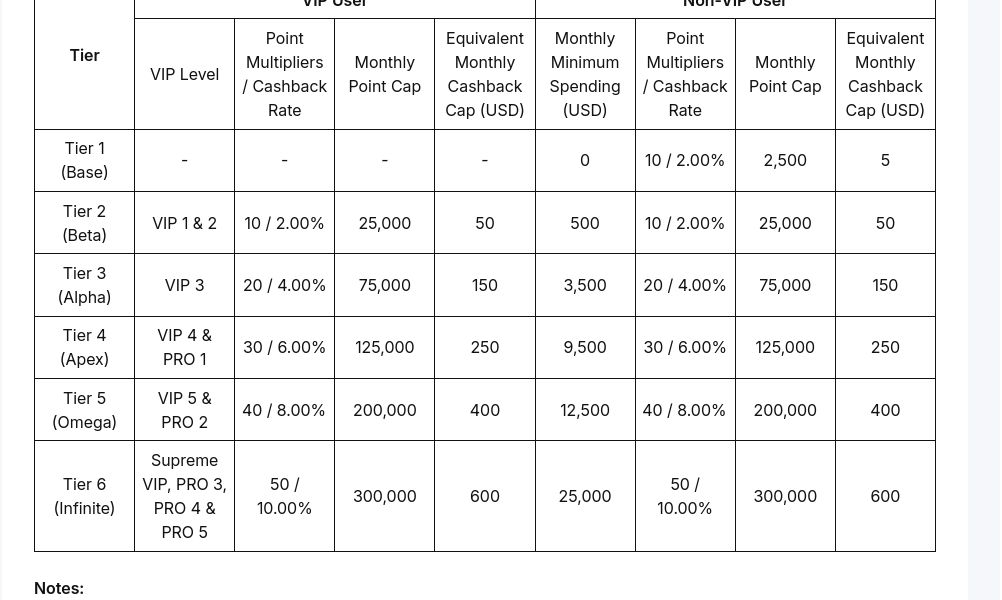
Bybit Card cashback is based on your VIP tier, which is determined by your 30-day trading volume or Bybit Token (BIT) holdings. The cashback is paid in the same crypto used for the transaction.
| Tier | Cashback Rate | Monthly Cap (USD) | Monthly Cap (AUD approx.) |
|---|---|---|---|
| Tier 1 (default) | 2% | US$5 | ~A$8 |
| Tier 2 | 2% | US$50 | ~A$80 |
| Tier 3 | 4% | US$150 | ~A$240 |
| Tier 4 | 6% | US$250 | ~A$400 |
| Tier 5 | 8% | US$400 | ~A$640 |
| Tier 6 Supreme VIP | 10% | US$600 | ~A$960 |
At Tier 1 (which most new users will be on), the cap is low — US$5/month. The cashback program becomes genuinely valuable from Tier 3 upward (4%, monthly cap US$150). Since 5 Oct 2026, only crypto-funded spending earns cashback. High-volume traders at Supreme VIP level can earn up to US$600/month.
100% Merchant Rebates
Separate from the tier-based cashback, Bybit offers 100% merchant rebates on eight subscriptions — ChatGPT Plus, Claude Pro, Netflix, Spotify, TradingView, Financial Times, Shahid and iQIYI. Since 5 Oct 2026 (10:00 UTC) the rebate is for VIP users and non-VIP users at Tier 3 or above, only when you pay with crypto, and only for subscriptions bought on the merchant’s own website. Rebates are paid as Rewards Points (500 per US$1) inside your tier’s monthly cap, then as USDT with Auto Cashback. Amazon Prime Video is not on the list. Check each plan’s current price on the merchant’s site.
How to Load AUD onto Bybit: PayID and OSKO
Australians can fund their Bybit account with AUD using PayID or OSKO (New Payments Platform) — both are near-instant, fee-free bank transfers that work with Commonwealth Bank, ANZ, NAB, Westpac, and most other Australian banks.
The process:
- In the Bybit app, go to Assets → Buy Crypto → P2P Trading.
- Select AUD as your fiat currency and USDT (or USDC) as the crypto.
- Choose a P2P seller with PayID listed as a payment method.
- Enter the AUD amount, confirm the order, and send your PayID bank transfer.
- Mark payment sent in the app. The seller releases crypto within minutes once they confirm receipt.
BPAY is also available through some P2P sellers, though PayID and OSKO are faster. There is no SWIFT fee and no intermediary bank cut — AUD enters Bybit P2P escrow directly from your Australian bank account.
Once you hold USDT or another supported crypto in your Funding Account, the Bybit Card draws from it automatically. For a full walkthrough of depositing and withdrawing on Bybit, see the Bybit Deposit & Withdrawal Guide.
How to Apply for the Bybit Card in Australia
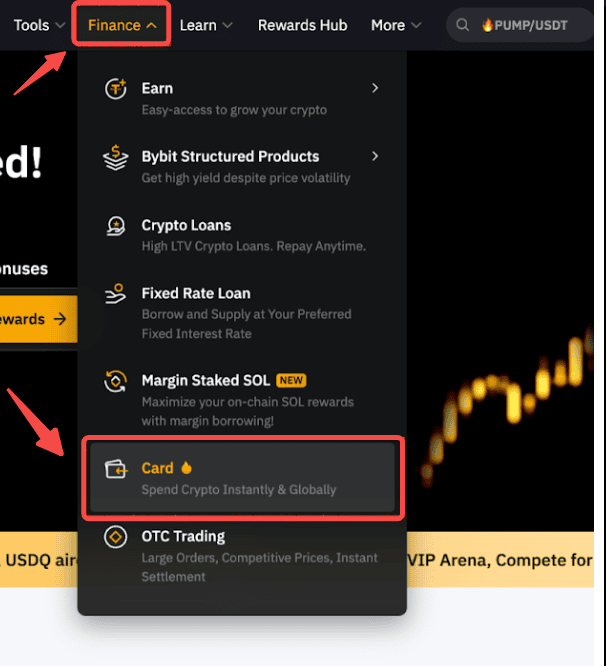
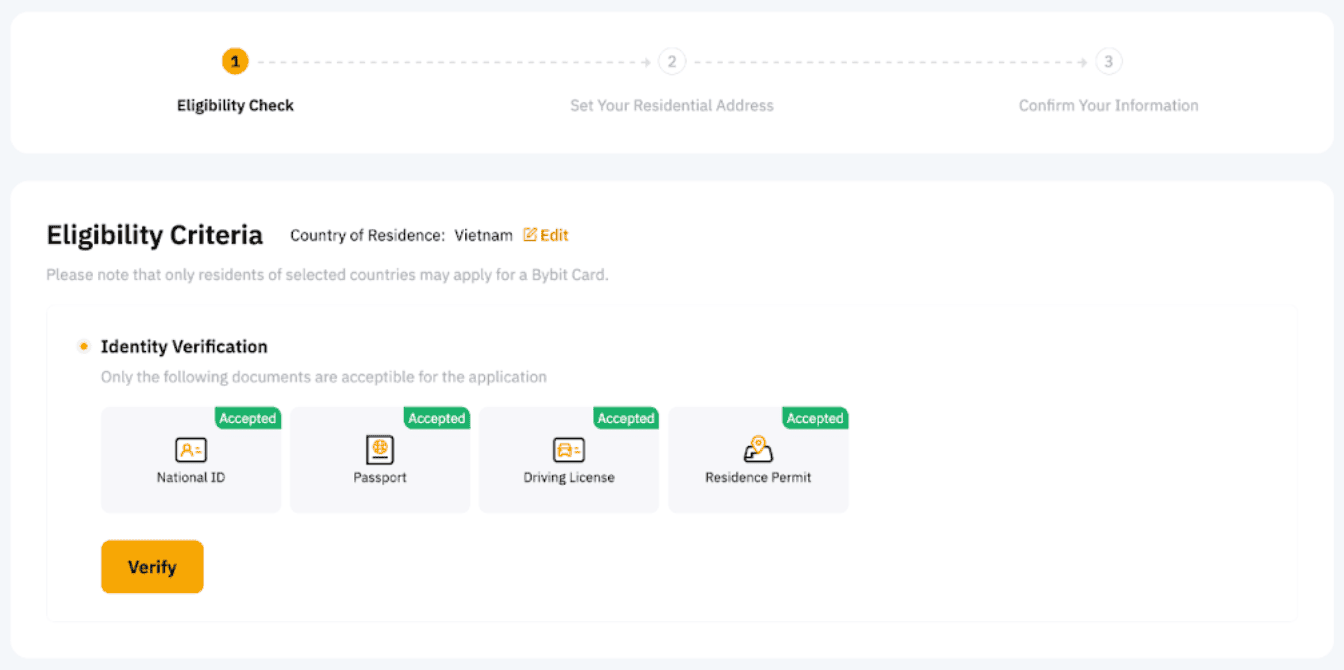
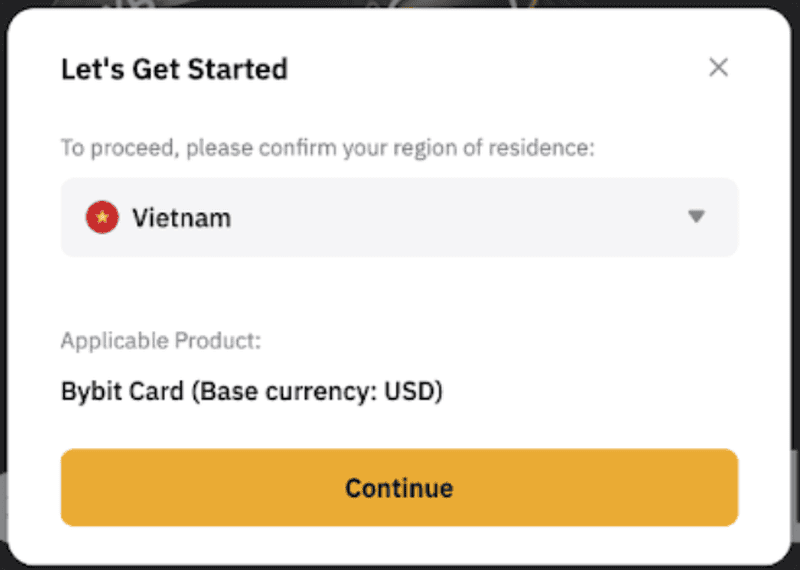
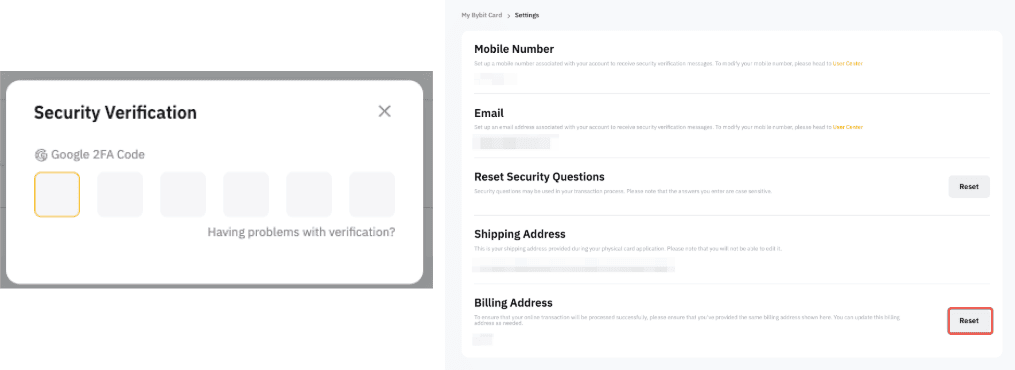
The application takes under five minutes. You need to be an Australian resident with a verified Bybit account (KYC Level 1 minimum).
For a complete overview of the Bybit Card’s global features, cashback mechanics, and supported currencies, see the Bybit Card complete review. This page covers the Australia-specific fees, tax obligations, and AUD funding options.
- Create or log in to your Bybit account — register via this link to link your account to the referral.
- Complete KYC Level 1 — you need a government-issued photo ID (Australian passport or driver’s licence). Identity verification typically completes within a few minutes to a few hours.
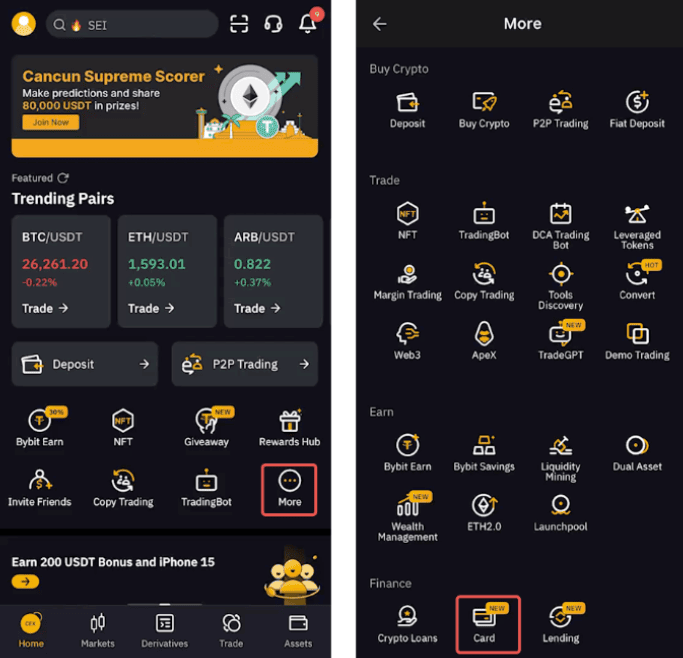
- Go to Cards in the app — tap the Card icon in the bottom navigation bar of the Bybit app.
- Apply for the virtual card — select Virtual Card, confirm your details, and the card number is generated instantly. No physical delivery required.
- Add to Apple Pay or Google Pay — in the card management screen, tap “Add to Wallet” to link the virtual Bybit Card to your phone’s wallet. You can tap and pay immediately.
- Optional: order physical card — if you want a physical Mastercard, pay the US$29.99 issuance fee (free for VIPs) after getting the virtual card, and allow up to 30 days for delivery to your Australian address.
Australian CGT Tax: What Every Cardholder Needs to Know
The ATO’s position on crypto debit cards is clear: each payment is a taxable crypto disposal event. When you use the Bybit Card to pay for groceries at Woolworths, Bybit converts your crypto to AUD. The ATO treats that conversion as a disposal — the difference between your acquisition cost (in AUD) and the AUD value at the point of spend is a capital gain or loss.
What this means in practice:
- Every transaction creates a tax record — date, AUD equivalent at acquisition, AUD equivalent at disposal, and the resulting gain/loss. Bybit’s transaction history export can help, but you are responsible for maintaining compliant records.
- 50% CGT discount — if you acquired the crypto more than 12 months before spending it, only 50% of the capital gain is included in your assessable income. For long-term holders paying subscriptions with BTC or ETH, this is worth considering in your record keeping.
- Stablecoins are not exempt — USDT pegged to USD can generate a CGT event in AUD terms if the AUD/USD exchange rate has moved since you acquired the stablecoin. A rising AUD means a potential capital loss; a falling AUD means a potential capital gain, even on a “stable” coin.
- CARF reporting — Australia has committed to implementing the OECD’s Crypto Asset Reporting Framework. AUSTRAC-registered exchanges will be required to report Australian user transaction data to the ATO. Budget for increased data-matching from the ATO in coming years.
This article does not constitute tax advice. Consult a registered tax agent who specialises in cryptocurrency before making decisions. The ATO publishes guidance on its website; the ATO’s position may change as legislation evolves.
Bybit Card vs Alternatives: How Does It Stack Up in Australia?
CoinSpot does not offer a debit card. Swyftx does not offer a debit card. That immediately makes Bybit Card one of a small number of crypto cards available to Australians. Here is how it compares to the alternatives actually operating in Australia:
| Card | Network | FX Fee (AUD) | Cashback | AUD On-Ramp | Available in AU |
|---|---|---|---|---|---|
| Bybit Card | Mastercard | 2% | 2–10% + 100% rebates | PayID / OSKO | Yes |
| Crypto.com Visa | Visa | ~0% (Midnight Blue) – varies | Up to 5% CRO (stake required) | PayID / bank transfer | Yes |
| Binance Card | Visa | 0.9% | Up to 8% BNB (stake required) | PayID P2P | Limited (check current AU status) |
| CoinSpot | N/A | N/A | N/A | PayID / BPAY | No card product |
| OKX Card | Mastercard | N/A | 2–5% USDG | PayID P2P | Not available in AU |
The Bybit Card’s 2% FX fee (plus 0.9% conversion) is in line with many crypto cards, though some cards in the table charge less on foreign purchases. Crypto.com Visa’s cashback requires staking CRO — a token with its own price risk. Bybit Card’s cashback is paid in the crypto you spent, with no staking requirement at lower tiers.
For Australians on Bybit anyway (for trading or exchange), the card is a natural add-on with minimal friction. For someone not already on Bybit, weigh the 2% FX fee and the VIP/Tier 3 requirement for the merchant rebates before signing up instead of leaving money on a standard bank card.
Related: OKX Card Australia 2026 — Not Available: Best Alternatives | Best Crypto Cards Australia 2026: 9 Cards Compared
Using the Bybit Card at Australian Merchants
The Bybit Card works anywhere Mastercard is accepted in Australia — which covers Woolworths, Coles, JB Hi-Fi, most petrol stations, and essentially every online retailer. Bybit’s Help Center lists the Australia card as USD-denominated, so AUD purchases are treated as foreign-currency transactions: the 2% FX fee applies on top of the 0.9% conversion fee when crypto is liquidated to settle the payment.
For purchases in USD, only the 0.9% conversion fee applies. For purchases in AUD, EUR, GBP and other currencies, the 2% FX fee applies too (about 2.9% combined), which is close to or below many bank cards’ 3–3.5% international transaction fees.
Apple Pay and Google Pay
Both mobile wallets are supported from day one. After adding the virtual Bybit Card to your iPhone’s Wallet app or Google Pay, you can tap and pay at any contactless terminal. This is standard at every major Australian supermarket and retailer. There is no additional step or confirmation needed at the point of sale beyond your phone’s biometric authentication.
Spending Limits
Standard daily limits apply. Bybit publishes current spending and ATM withdrawal limits in the Card section of the app and in the Help Centre. ATM withdrawals are free for the first US$100 per month; after that, a 2% fee applies. There is no charge for Mastercard purchases within the daily limit.
Frequently Asked Questions
Is the Bybit Card available in Australia?
Yes. Bybit is registered with AUSTRAC and the Bybit Card is available to Australian residents who complete KYC Level 1. The virtual card is issued instantly; the physical card ships to Australian addresses for US$29.99 (free for VIPs).
What is the FX fee for AUD payments?
2% on transactions in a currency other than USD, which includes AUD because the Australia card is USD-denominated. There is also a 0.9% conversion fee (minimum US$1) when crypto is liquidated to settle each payment, so an AUD purchase costs about 2.9% in total.
Do I need to pay tax when using the Bybit Card in Australia?
Yes. The ATO treats each card payment as a crypto disposal event subject to CGT. You are required to keep records of every transaction, including the AUD equivalent at acquisition and disposal. The 50% CGT discount applies to assets held more than 12 months. Consult a registered tax agent for your specific situation.
Can I fund my Bybit account with AUD?
Yes, via PayID or OSKO through Bybit’s P2P marketplace. Select AUD as the fiat currency, choose a verified P2P seller with PayID enabled, and transfer directly from your Australian bank. No SWIFT fees, no international transfer required.
Does the 100% merchant rebate apply in Australia?
Yes, with conditions. Since 5 Oct 2026, ChatGPT Plus, Claude Pro, Netflix, Spotify, TradingView, Financial Times, Shahid and iQIYI qualify for the 100% rebate for VIP users and non-VIP users at Tier 3 or above, when paid with crypto on the merchant’s own website. Amazon Prime Video is not on the list. The rebate is paid as Rewards Points inside your tier’s monthly cap.
Is there a minimum balance to use the card?
No fixed minimum, but you need enough crypto in your Bybit Funding Account to cover each transaction plus the conversion fee. If your balance is insufficient at the point of sale, the payment will decline.
Is the Bybit Card Worth It for Australians?
For someone already on Bybit, the answer is straightforward: yes. The virtual card is free, takes five minutes to set up, and the 2% FX fee (plus 0.9% conversion) is comparable with other crypto cards. The 100% merchant rebates on Netflix, Spotify and similar subscriptions can cover the card’s running costs if you are a VIP or reach Tier 3.
For someone not on Bybit: the card’s fees and features are competitive enough to justify signing up. The PayID on-ramp is fast, the Apple Pay integration works natively at Australian contactless terminals, and the cashback tiers scale well for active traders.
The tax overhead is real. Every transaction generates a CGT record. For casual users who hate spreadsheets, this is a legitimate reason to pause — you will need crypto tax software or an accountant to manage the record-keeping properly. For users already dealing with crypto CGT from trading, the card adds relatively little additional complexity.
Bottom line: the Bybit Card is a practical crypto Mastercard for Australian residents who already use Bybit, with an easy on-ramp through PayID and six cashback tiers; check the 2% FX fee and the VIP/Tier 3 rebate requirement against your own spending.
Disclaimer: This article is for informational purposes only and does not constitute financial or tax advice. Each use of the Bybit Card to make a payment triggers a CGT event in Australia. Consult a registered tax agent familiar with cryptocurrency. Regulatory requirements in Australia are set by AUSTRAC and ASIC; the information in this article reflects publicly available information as of October 2026 and may change. Last updated: October 2026. This site may earn a commission if you register via the links above.