RedotPay Card Egypt 2026: What Egyptian Residents Can Get, Fees in EGP and Sign-Up Steps
Key points
- Egyptian residents can open a RedotPay account, pass KYC and buy the 10 USD virtual card: Egypt is not on RedotPay’s KYC, app-access or card-issuance lists (read on 3 November 2026). RedotPay still approves each person individually.
- There is no physical card for Egypt. It is on the official card-delivery restriction list (21 July 2026), so no ATM cash and no use for the free physical card in the annual Pro plan.
- Cost: 10 USD once, no monthly or annual fee. USD-priced purchases cost about 1.00%; EGP-priced ones about 2.20% (1.00% conversion plus 1.20% non-default currency). At the Central Bank of Egypt rate of 55.51 EGP per USD, a 100 USD purchase at an EGP-priced shop adds about 122 EGP.
- Fund it with USDT or USDC on the networks shown in the app (TRC20, Solana, TON, Arbitrum, ERC20, BEP20; 1 USDT minimum per chain, usually 1 to 15 minutes, no RedotPay deposit fee). Buying USDT with EGP happens outside RedotPay.
- Egyptian users report three recurring problems: KYC rejected as a duplicate ID or because the ID name is only in Arabic, slow support, and 0.50 USD fees on declined payments after the third each month.
RedotPay card Egypt: what a resident gets
RedotPay is a stablecoin payment app. You deposit USDT or USDC, and when you pay, the app converts the crypto at the point of sale, so the merchant sees an ordinary Visa payment. For Egypt the useful product is the virtual card: it works online and in a phone wallet, and it is the only card you can get. The table below splits the eligibility question into the layers that decide it.
| Layer | Result for Egypt | Official page |
|---|---|---|
| App access | Egypt is not on the location-access list (28 August 2026) | Location-Based Access Restrictions |
| KYC | Egypt is not on the unsupported list; passport, ID card or driving licence via Sumsub | Unsupported Countries/Regions |
| Virtual card | Egypt is not on the issuance list (28 August 2026); 10 USD one-time | Card Issuance Restrictions |
| Physical card | Egypt is on the delivery list (21 July 2026): not shipped | Card Delivery Restrictions |
| ATM cash | Physical card only, so not available | Same page |
An official list that does not name Egypt is not an approval. RedotPay reviews every KYC submission, and the lists change, so I re-read all four pages on 3 November 2026 before writing this.
Fees and what they cost in EGP
| Item | Fee |
|---|---|
| Virtual card | 10 USD, one time |
| Physical card | 100 USD (not shippable to Egypt) |
| Monthly or annual fee | None |
| Deposit | Free (network and sender fees are extra) |
| Transaction in the card’s default currency | Waived |
| Transaction in another currency | 1.20% |
| Crypto conversion | 1.00% |
| Small authorisation (1 USD or less) | First 5 per card per month free, then 0.20 USD |
| Declined transaction | First 3 per card per month free, then 0.50 USD |
| Virtual card replacement | 5 USD the first time, 10 USD after |
The official table treats the card’s own currency as the default, so on a USD card a USD price is the cheap case. Check the currency shown on your card in the app. Converted at the Central Bank of Egypt sell rate of 55.5051 EGP per USD (2 November 2026), the numbers look like this:
| What you do | Cost in USD | Cost in EGP |
|---|---|---|
| Buy the virtual card | 10.00 | about 555 |
| Pay 100 USD at a USD-priced merchant | about 1.00 | about 56 |
| Pay the EGP equivalent of 100 USD (about 5,551 EGP) at an EGP-priced merchant | about 2.20 | about 122 |
| One declined payment after the free three | 0.50 | about 28 |
| One small authorisation after the free five | 0.20 | about 11 |
My reading: always pay in USD when a site lets you choose, because EGP pricing roughly doubles the cost. The 5 USDs welcome reward is valid for 30 days, works for purchases and cannot pay the card fee.
RedotPay Pro costs 12.90 USD a month or 129 USD a year. The 3% cashback only covers Apple Pay and Google Pay spending and stops at 18 USDs a month, so the monthly plan breaks even at about 430 USD of wallet spending. The monthly plan also waives the 10 USD virtual card fee once per account, which only pays off if you buy the card in the same month you subscribe. The annual plan’s free physical card and ATM fee waiver do nothing for Egyptian residents, and I could not confirm that Pro is offered in Egypt, so look for it in the app before paying.
Sign up, KYC and the virtual card, step by step
Step 1: create the account
Download the app, then sign up with your email. A referral link only works if it is used at sign-up: the code goes in the Referral Code (Optional) field on the login screen and cannot be added afterwards.
Step 2: pass KYC
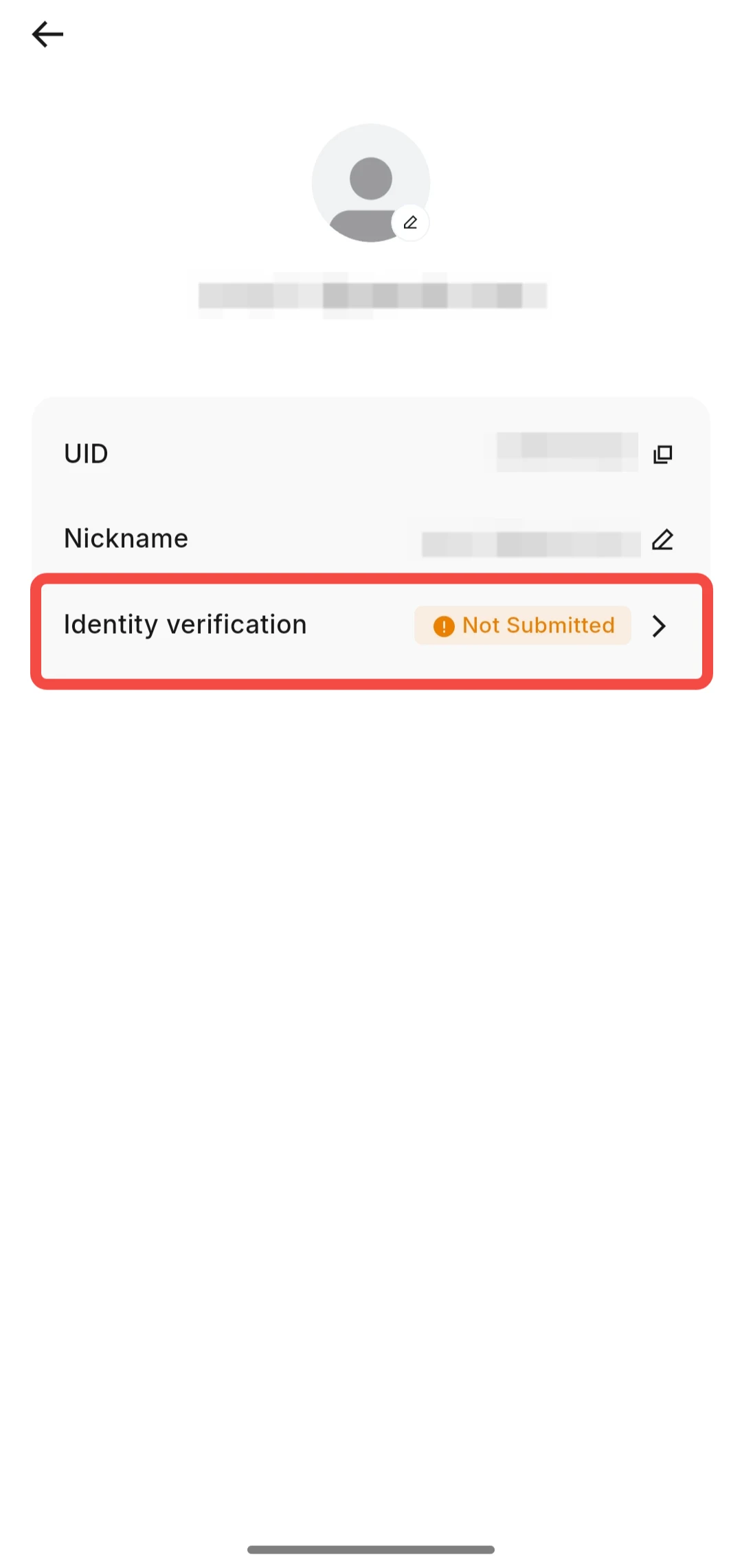
In the app open your profile and tap Identity verification. The Sumsub check asks for an ID document, a face scan, a confirmation of your details, a residential address and a short 4 to 5 question survey. You must be 18, one person gets one account, only original documents count and the document must be valid for at least 3 months. It usually finishes in minutes; if extra documents are requested, allow 1 to 3 business days and answer within about 14 days.
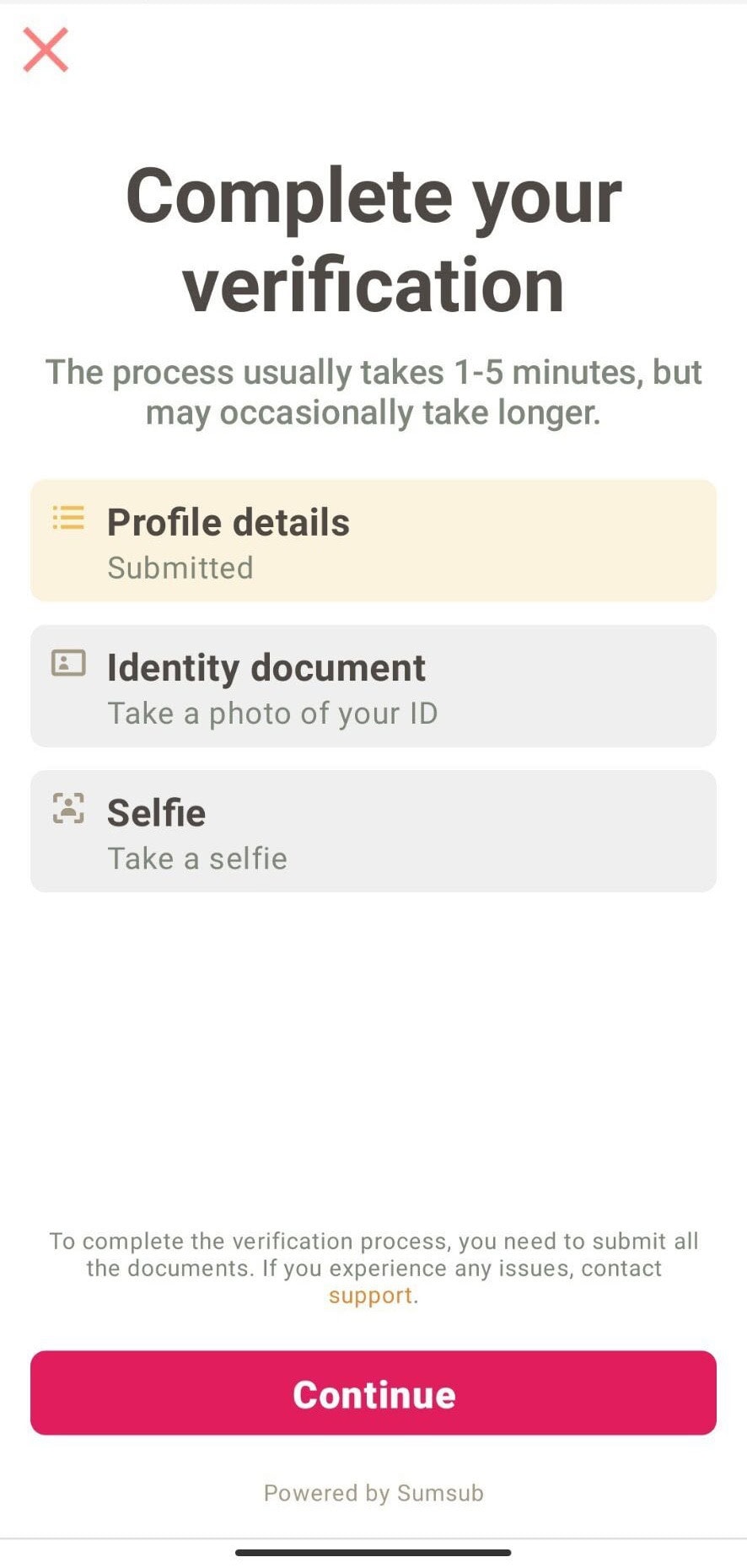
Two Egypt-specific snags come up again and again in what Egyptian users write. Some were rejected as a duplicate verification because their ID was already linked to another account, and others got stuck because the name on the ID is only in Arabic. I would start with the document that shows your name in Latin letters, make sure the same ID has never been used on a second account, and spell your name the same way in the address fields later.
Step 3: put money in before you apply
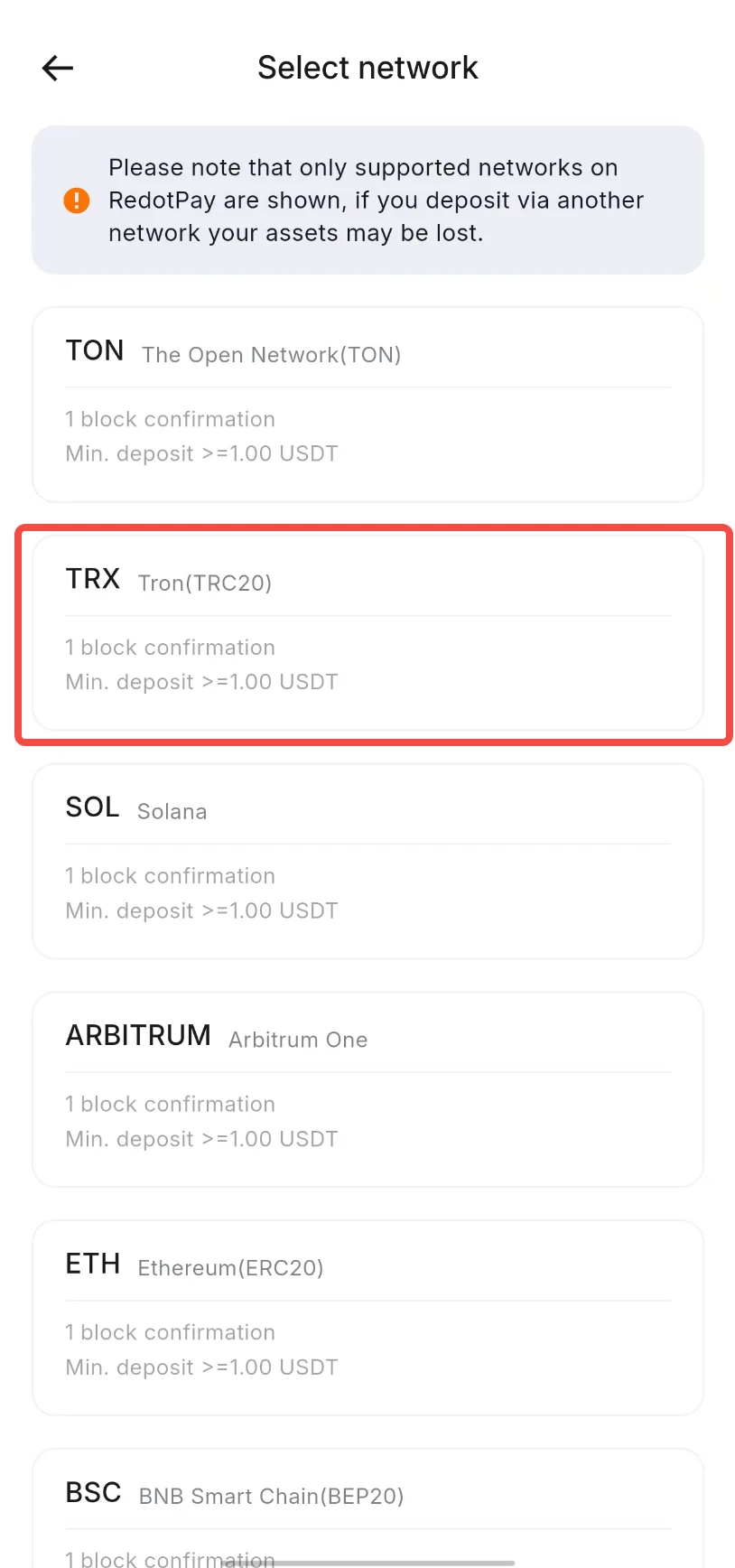
Open Deposit, pick USDT or USDC, choose a network, copy the address or scan the QR code and send from your wallet or exchange on the same network. Every USDT network on the official screen has a 1 USDT minimum. A deposit below the minimum is not credited, but sending a second deposit of the same asset on the same network that reaches the minimum merges both. Most deposits arrive in 1 to 15 minutes and show up under Assets.
How you get USDT with Egyptian pounds is outside RedotPay’s own pages and I do not walk through it here. The one rule worth reading first comes from the central bank: its warning statement says Law No. 194 of 2020 prohibits issuing, trading or promoting cryptocurrency and operating trading platforms without a licence, with a fine of EGP 1 million to 10 million and or imprisonment, and it warns the public against dealing in all types of virtual currencies.
Step 4: apply for the virtual card
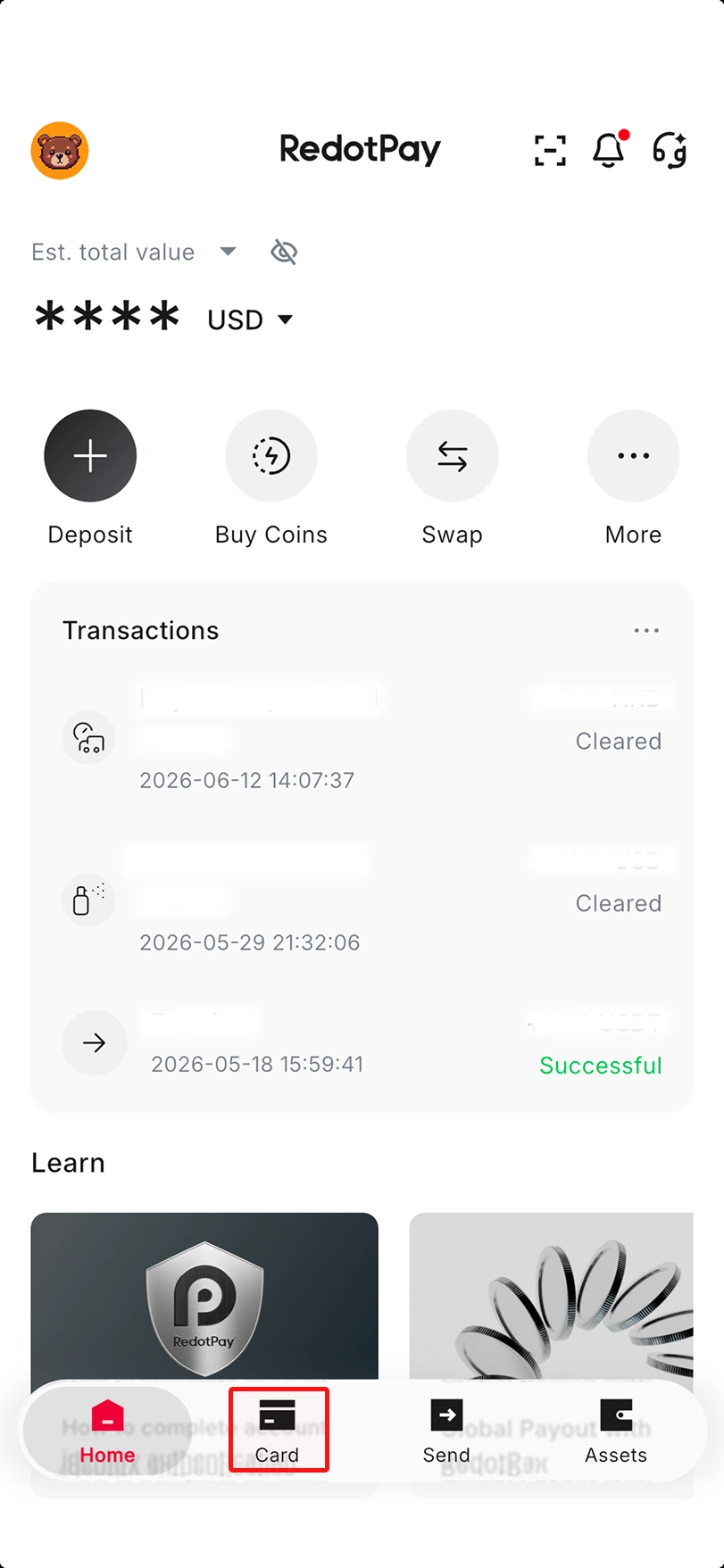
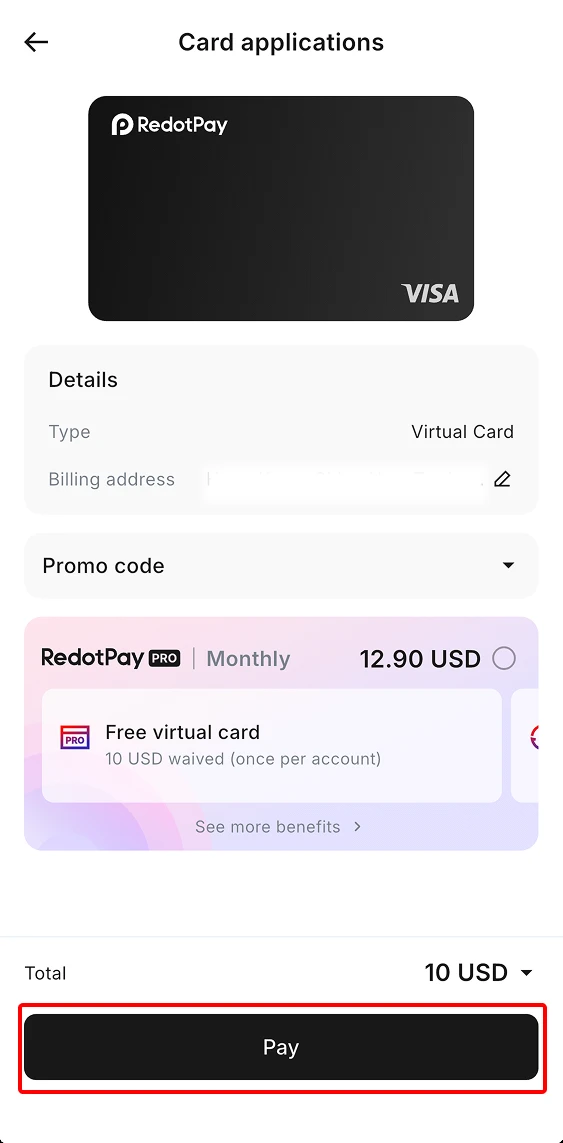
Go to Card, tap Apply for card for 10 USD, edit the billing address, then tap Pay. Both billing and shipping addresses must be typed in English, the name on the billing address is printed on the card and cannot be changed later, and the payment cannot be cancelled or refunded.
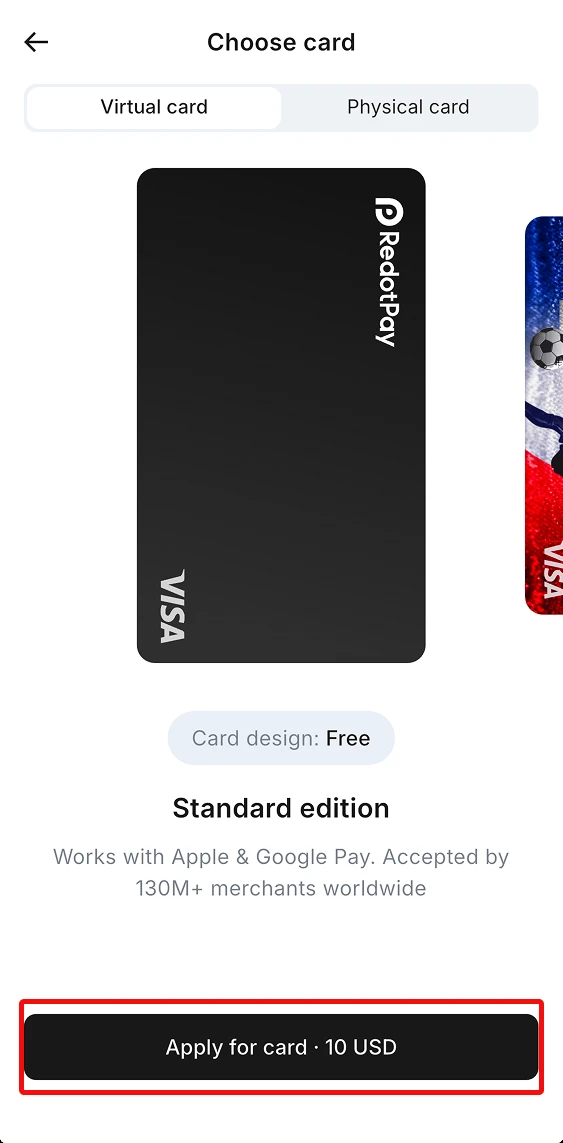
To add the card to Apple Wallet, update the app to version 3.0.1 or later, open Card, tap Upgrade for the free card upgrade (new card number, CVV and a fresh 3-year expiry) and add the new card in Wallet. Your iPhone needs Face ID, Touch ID or a passcode and your Apple ID needs two-factor authentication. The Choose card screen also lists Google Pay for the virtual card and says the card is accepted by 130M+ merchants worldwide.
Credit and Earn: leave them alone at first
The app also offers Credit and Earn. Credit charges a fixed simple interest of 0.05% per day on whatever you owe, roughly 1.5% a month, which is far more than the 1% conversion fee you were trying to avoid, so I would not borrow against the card to bridge a gap. Earn needs at least 100 USDC or USDT, pays a variable rate that moves with the market, is not a bank deposit and is only offered in some regions, so check whether it appears for your account before counting on it.
Where it works and where Egyptian users hit limits
- Online shops and subscriptions: the virtual card pays wherever the card network is accepted, in a phone wallet or by card number. The cheap case is a USD-priced service; see the cost table above.
- Cash: none. The virtual card cannot withdraw at an ATM and Egypt is on the physical-card delivery list.
- Google Play Egypt: an Egyptian review site says the card can show as unavailable in the Egyptian Play store, and the workaround people use (changing the store country) changes prices. I would not count on RedotPay for Egyptian Play purchases.
- PayPal payouts: one Egyptian user reports that RedotPay started rejecting PayPal transfers that used to arrive monthly. Test with a small amount first.
- Declines: repeated failed attempts are the most common cost complaint, so retry at most twice and check the balance first.
Who it is best for, and the risks
Your deposit sits inside RedotPay’s app, not in a wallet you control, so a frozen account means a frozen balance. Egyptian users describe slow support and duplicate-ID rejections they call permanent, so keep only what you plan to spend. The balance is held in a stablecoin rather than pounds, which is the point for paying dollar bills and also the risk if the stablecoin or the app has a problem.
It suits people who already hold USDT and pay dollar-priced services, such as software, hosting, ads or travel bookings. It does not suit anyone who needs cash, a physical card or a pound-denominated local product. If a physical card matters, read the issuance and delivery pages of each product before depositing: I keep the details in the KAST card guide, the Bybit Card guide and the global RedotPay guide.
Frequently asked questions
Can Egyptian residents use RedotPay?
Egypt is not on RedotPay’s KYC, app-access or card-issuance lists (checked 3 November 2026), so an Egyptian resident can complete KYC and buy the 10 USD virtual card. Approval is still individual.
Can I get a physical RedotPay card in Egypt?
No. Egypt is on the Card Delivery Restrictions list (21 July 2026), so RedotPay does not ship physical cards there, and that also rules out the annual Pro plan’s free physical card.
Can I withdraw EGP cash at an Egyptian ATM with RedotPay?
No. ATM withdrawals need the physical card, and the virtual card cannot be used at an ATM.
How much does a 100 USD purchase cost in EGP?
About 1.00 USD (roughly 56 EGP) at a USD-priced merchant and about 2.20 USD (roughly 122 EGP) at an EGP-priced one, at the Central Bank of Egypt sell rate of 55.5051 on 2 November 2026.
Is RedotPay legal in Egypt?
I cannot call it legal. The RedotPay pages I read make no claim of an Egyptian licence or registration, and the Central Bank of Egypt says Law 194 of 2020 requires a licence to issue, trade or promote cryptocurrency and warns the public against dealing in virtual currencies. This page makes no claim that RedotPay is licensed in Egypt.
What is the sign-up reward?
New users get a 5 USDs reward at sign-up through a referral link. It is valid for 30 days and can pay for purchases but not for the card issuance fee.
How long does KYC take?
Usually a few minutes after you submit. If RedotPay asks for extra documents, plan for 1 to 3 business days and send them within about 14 days, otherwise the verification fails.
Does RedotPay charge a deposit fee?
No, RedotPay lists deposits as free. The network fee of your sending wallet or exchange is separate.
What is the minimum deposit?
1 USDT on each USDT network shown in the app. A deposit below the minimum is not credited until a second deposit of the same asset on the same network brings it above the minimum.
Affiliate disclosure: some links on this page are referral links, and if you sign up through them we may earn a reward at no extra cost to you. Last updated 3 November 2026; fees were re-checked against the official fee table and Help Center articles on that date.