
Wise vs Revolut 2026: Fees, Rates & Which to Choose
Key Takeaways
- Both Wise and Revolut officially support personal accounts for residents of the US, UK, EU/EEA, Australia, Japan, Singapore, and Switzerland; check the full eligibility list before you sign up.
- Wise uses the mid-market exchange rate with a transparent fee from about 0.2–0.24% depending on your country and currency (UK from 0.24%, EEA from 0.2%).
- Revolut’s free Standard plan gives you a monthly fair-usage FX allowance (£1,000 in the UK, €1,000 in the EEA), then charges a fair-usage fee on extra exchanges (1% on Standard in both the UK and the EEA, 0.5% on Plus); weekend exchanges can carry an additional fee, and Revolut’s own pages list the exact terms per country.
- Compare the same amount in both apps: within its monthly allowance on weekdays Revolut can be cheaper; above the allowance or at weekends its extra fees apply.
- ATM withdrawals: Wise gives €250/month free in the EEA then charges 2.69% over that; Revolut Standard gives £200 or 5 withdrawals free, then 2% (minimum £1).
- Revolut runs built-in crypto trading (300+ coins) and thousands of US stocks and ETFs; Wise has no investing feature at all and stays focused on transfers and multi-currency holding.
- Revolut Metal (£16.99/month) cuts international transfer fees by 40%; Ultra (£60/month) drops them to zero.
Wise vs Revolut 2026: Quick Comparison Table
| Category | Wise | Revolut Standard (Free) |
|---|---|---|
| Account eligibility | Personal accounts in 80+ countries, incl. US, UK, EU, Australia, Singapore | US, UK, EEA, Australia, Brazil, Japan, New Zealand, Singapore, Switzerland |
| Monthly account fee | Free | Free (paid tiers £3.99–£60/month) |
| Exchange rate | Mid-market rate, no markup | Revolut rate plus a variable exchange fee shown in-app; weekend fee on Standard |
| Transfer fee | From ~0.2–0.24% (UK 0.24%, EEA 0.2%) | Free within fair-usage limit, then +1% on Standard (UK and EEA) |
| Free FX allowance | No cap | £1,000/month (EEA €1,000), then +1% on Standard |
| Free ATM withdrawals | €250/month (EEA) | £200/month or 5 withdrawals |
| ATM over-limit fee | 2.69% | 2% (minimum £1) |
| Currencies held | 40+ | 36 |
| Transfer destinations | 160+ countries | 160+ countries |
| Physical card | Yes (country-gated; check availability) | Yes (country-gated) |
| Crypto trading | Not available | 300+ coins |
| Stocks/ETFs | Not available | Thousands of US stocks and ETFs |
| Regulatory status | FCA e-money institution + 65+ local licenses | UK bank (Revolut Bank UK Ltd, PRA-authorised, FCA/PRA-regulated); EU banking license via Revolut Bank UAB (Lithuania) |
| Founded | 2011, London | 2015, London |
| Users | 18.9M (customers, businesses and banks, per Wise) | 80M+ (per Revolut) |
Who Can Use Wise and Revolut? Country & Eligibility
Eligibility is the real starting line, before fees even matter. Wise lets personal accounts hold money in 80+ countries and territories, covering the US, UK, EU/EEA, Australia, Japan, Singapore, Hong Kong, and most of Latin America and the Gulf. A small number of countries have extra conditions attached, so check the official list above for your specific country before assuming full access.
Revolut’s personal-account list is shorter but still covers most English-speaking markets: Australia, Brazil, the EEA, Japan, New Zealand, Singapore, Switzerland, the UK, and the US. If your country is on neither list, Wise’s broader 80+ country coverage is the one worth checking first.
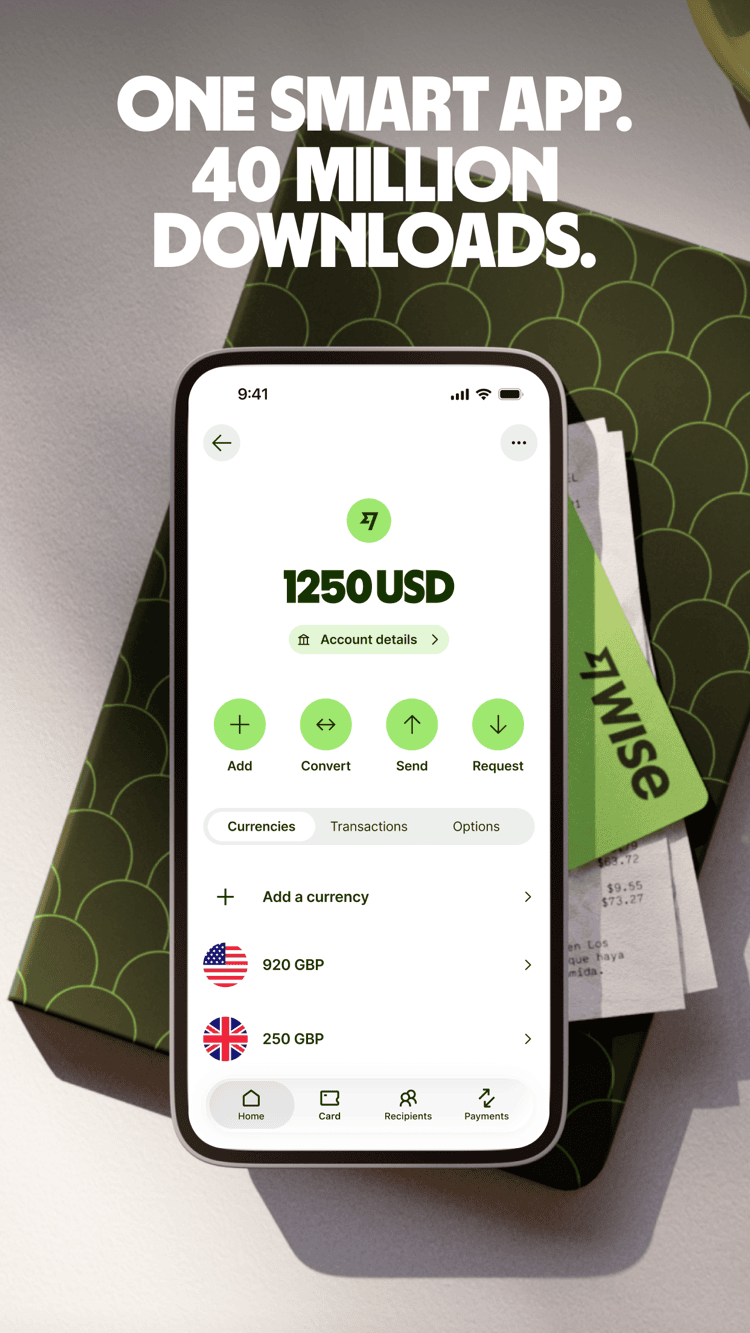
KYC for both is standard: a government ID plus a selfie, with no unusual extra step for either product. For Wise specifically, your registered address has to be in a country where Wise actually offers your chosen currency, or the account details for that currency become inactive if you move. See our full Wise account walkthrough for the exact signup steps.
Fee Comparison: Transfers, Currency Exchange, and ATM Withdrawals
Wise’s fee structure is deliberately simple: a fixed fee plus a percentage of the amount, starting from about 0.24% in the UK and 0.2% in the EEA, depending on country and currency. The full cost is shown before you confirm — there’s no separate markup hiding in the exchange rate.
- Revolut Standard: free up to the monthly fair-usage FX allowance (£1,000 UK, €1,000 EEA), then a 1% fair-usage fee in both (0.5% on Plus)
- Weekend conversions: the UK plans page lists an extra 1% on Standard (0.5% on Plus, none on Premium and above); the EEA fee page lists 1% between Friday 17:00 and Sunday 18:00 New York time
- Premium (£8.99/month): removes the FX cap entirely
- Metal (£16.99/month): cuts international transfer fees by 40%
- Ultra (£60/month): international transfers are free
Within its monthly allowance on weekdays Revolut can be cheaper than Wise on a given transfer; above the allowance or at weekends its extra fees apply — compare what the recipient gets in both apps for the same amount before you decide.
The fee you see at checkout isn’t always the whole cost. If your plans change and you convert the leftover back to your original currency, that’s a second conversion — check the quoted fee before you confirm it, rather than assuming it’s free.
ATM withdrawals follow a similar split. Wise gives you €250/month free in the EEA, then charges 2.69% on anything over that. Revolut Standard gives £200/month or 5 withdrawals free (whichever comes first), then charges 2% with a £1 minimum. For anyone pulling cash regularly while traveling, that 2.69% vs. 2% gap adds up faster than the headline transfer fees do.
Exchange Rates: Who Gives You a Better Deal?
Wise uses the mid-market rate — the same wholesale rate banks trade at with each other — and charges its fee separately instead of folding it into the rate. The number you’d see searching “EUR/USD” on Google is the number Wise actually uses.
Revolut’s Standard plan converts at Revolut’s rate plus a variable exchange fee that the app shows before you confirm, and it lists a separate weekend fee (UK: 1% on Standard; EEA: 1% from Friday 17:00 to Sunday 18:00 New York time). If you tend to send money on a Friday evening or over the weekend, that extra fee is worth planning around — moving the same transfer to a weekday avoids it.
Card Features: Apple Pay, Virtual Cards, and ATM Limits

Wise issues a Visa debit card with Apple Pay and Google Pay support depending on region, plus in-app controls to freeze the card, set ATM limits, and manage spending. Card availability is country-gated separately from account eligibility — some countries can hold a Wise balance but can’t yet order the physical card and sit on a waitlist instead. If you’re relocating somewhere the card isn’t live yet, see how other users have handled the same gap in our Wise UAE guide.
Not having the physical card doesn’t touch Wise’s core functions: holding multiple currencies, receiving transfers, and converting money all work the same with just the app. For anyone whose main need is sending money abroad or receiving an overseas paycheck, the card is a nice-to-have, not a blocker. Revolut’s card features go further where it’s available, assuming you’ve cleared the account-eligibility bar first:
- Disposable virtual card numbers for one-time online purchases
- Automatic card freezing from inside the app
- Built-in spending-category breakdowns
Supported Currencies and International Transfer Coverage
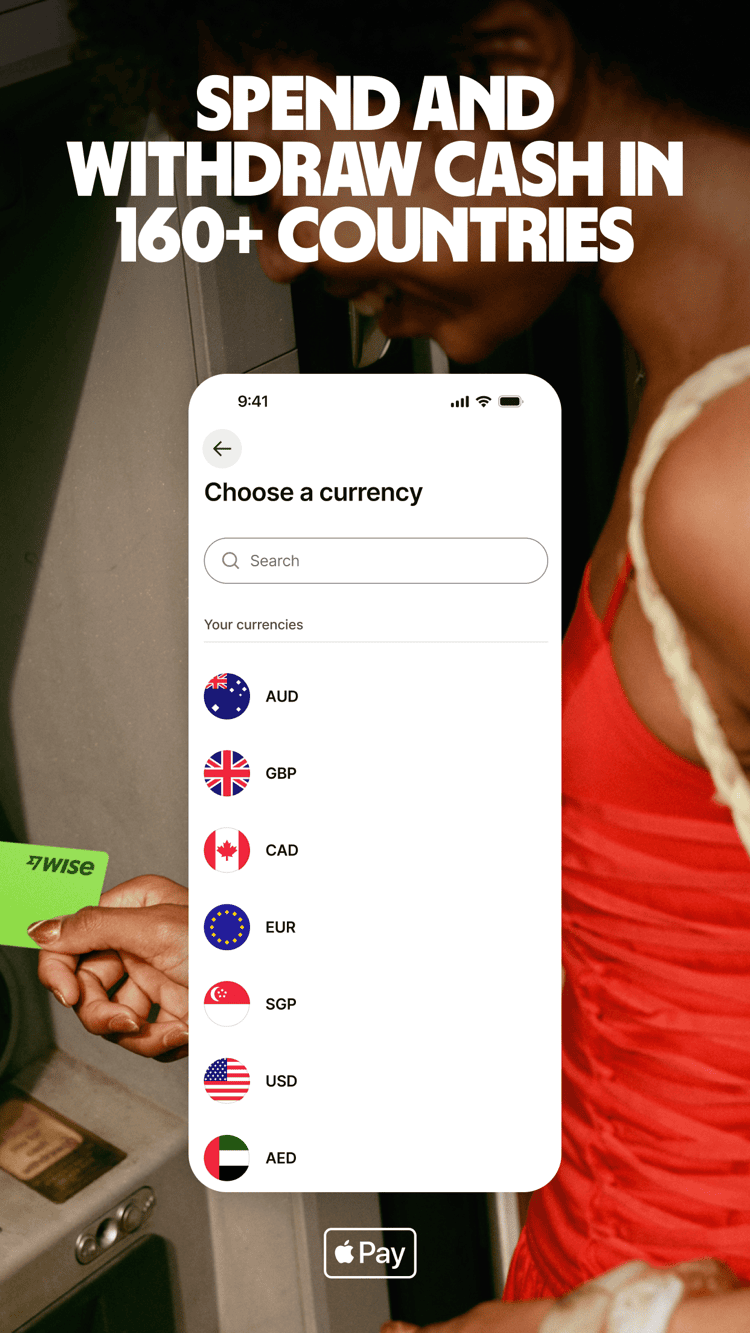
Wise supports 40+ currencies and can send to 160+ countries. The practical win for most readers is the local account details: a US routing and account number, a UK sort code and account number, and a Euro IBAN, among others. That lets you receive an overseas paycheck, a brokerage payout, or freelance client payments as if you had a local bank account in that country — see the full setup in our Wise UK review if a GBP account is what you need.
Revolut supports 36 currencies in-app and sends to 160+ countries — fewer currencies than Wise on paper, but every major currency is covered. Revolut is especially widespread among people actually living in Europe: EEA customers get euro account details with an IBAN, including on the free Standard plan, which is convenient for local billing and salary deposits inside the EU.
Crypto and Investment Features
Revolut is clearly ahead here. The app has built-in trading for 300+ cryptocurrencies plus thousands of US stocks and ETFs, all inside the same account you already use for everyday transfers — no separate brokerage signup required.
Wise has no crypto or stock-trading feature at all. It’s purely a transfer and multi-currency account tool. If you want to manage daily spending money and crypto or stock investing in one app, Revolut is the only option between the two — assuming you’re eligible to open an account.
Security and Regulatory Comparison
Wise operates as an FCA-regulated e-money institution in the UK and holds separate local licenses in 65+ countries. Customer funds are legally kept apart from Wise’s own operating money, a practice called safeguarding — it is not the same as bank deposit insurance, but it is designed to keep customer balances out of Wise’s own creditor pool if the company ever became insolvent.
In the UK, Revolut customers are served by Revolut Bank UK Ltd, which is authorised by the PRA and regulated by the FCA and PRA (Revolut Ltd itself is an FCA-authorised e-money institution); through its EU entity Revolut Bank UAB, Revolut holds a full banking license in Lithuania supervised by the European Central Bank and the Bank of Lithuania — EU balances there qualify for EU deposit protection up to the standard threshold. In the US, neither is a bank: Revolut says funds in a Revolut Prepaid Card account are held at Lead Bank, Member FDIC, and are FDIC-insured up to applicable limits, but that insurance does not cover Revolut’s own failure. Wise’s US help page says money in a Wise account is not FDIC-insured unless you opt into its interest feature, which adds pass-through FDIC cover of up to $250,000. For most people moving everyday transfer amounts, that distinction rarely matters in practice, but it’s worth knowing before you park a large sum. Our full Revolut review covers the EU banking license and plan tiers in more detail.
Wise vs Revolut: Which One Should You Choose?
Based on what each product is actually built for:
| Your situation | Recommendation | Why |
|---|---|---|
| You send money abroad regularly | Wise | Lower, transparent fees on the mid-market rate |
| You just need to receive foreign income or freelance payments | Wise | Local account details in the US, UK, and EU without needing a local bank account |
| You live in or travel often to Europe and want a real local account | Revolut | Euro IBAN available on the free Standard plan; widely used across the EU |
| You’re relocating for work or study | Wise or Revolut | Both gate card/account availability by country — check your destination first |
| You want crypto or stock trading in the same app | Revolut | Wise has no investing feature at all |
| You’re sending money home to family abroad | Wise | Transparent fee, no hidden FX markup to budget around |
My read after comparing both fee schedules side by side: Wise’s edge is predictability — the fee and rate are both visible before you confirm, which matters most if you’re sending money regularly and want to budget for it. Revolut’s edge is breadth — one app that also handles crypto, stocks, and a usable local IBAN if you’re actually living somewhere in Europe. In my view, breadth is the reason to open a Revolut account, then check which plan and features your country gets. Neither replaces the other; most people comparing them are really asking which one fits how they move money, not which one is “better” in the abstract.
Further reading: Wise Tutorial 2026: Open an Account, Send Money, and Use the Card
Frequently Asked Questions
Can I open a Wise or Revolut account if I live in the US?
Yes. The United States is on the official supported-account list for both Wise and Revolut, alongside the UK, EU/EEA, Australia, Japan, Singapore, and Switzerland. Standard government-ID-plus-selfie KYC applies to both; check each provider’s US help page for any additional identity requirements.
Which is cheaper for international transfers, Wise or Revolut?
Wise uses the mid-market rate with a transparent fee from about 0.2–0.24% depending on country and currency. Revolut’s free Standard plan is fee-free up to a monthly FX allowance (£1,000 UK, €1,000 EEA), then adds a 1% fair-usage fee on Standard in both the UK and the EEA (0.5% on Plus), and weekend exchanges carry an extra fee on Standard. Within its monthly allowance on weekdays Revolut can be cheaper; above the allowance or at weekends its extra fees apply — compare what the recipient gets in both apps for the same amount.
Can I buy crypto or stocks with Wise or Revolut?
Revolut, yes: 300+ cryptocurrencies and thousands of US stocks and ETFs inside the same app, though availability varies by country and the assets are held in Revolut’s custody, not a self-custody wallet. Wise has no crypto or stock-trading feature; it’s a transfer and multi-currency account tool only.
Are Wise and Revolut safe to use?
Both are regulated. Wise is an FCA-regulated e-money institution with local licenses in 65+ countries and keeps customer funds legally separate from its own operating money. In the UK, Revolut customers are served by Revolut Bank UK Ltd (PRA-authorised, FCA/PRA-regulated), and Revolut holds a full Lithuanian banking license through its EU entity, Revolut Bank UAB, giving EU balances deposit protection. In the US, neither is a bank; Revolut’s Prepaid Card funds are held at Lead Bank (Member FDIC) and FDIC-insured up to applicable limits, which does not protect against Revolut’s own failure.
Which countries can’t use Revolut yet?
Revolut’s personal-account list covers Australia, Brazil, the EEA, Japan, New Zealand, Singapore, Switzerland, the UK, and the US; outside that list, Revolut is generally unavailable to personal applicants, subject to official updates. If your country isn’t on the list, Wise’s 80+ country eligibility list is worth checking as an alternative, since it covers a wider range of markets for holding a balance.
Does Revolut charge extra fees on weekends?
Yes, on the free Standard plan. The UK plans page lists a 1% weekend currency-exchange fee on Standard (0.5% on Plus, none on Premium, Metal and Ultra); the EEA fee page lists 1% between Friday 17:00 and Sunday 18:00 New York time. Check the exact fee in the app before you confirm, and moving a conversion to a weekday avoids the weekend fee.
Fees, FX allowances, and plan prices here are current as of October 2026 and sourced from each provider’s official pricing and help-center pages; both companies change these terms periodically, so confirm the live numbers on wise.com and revolut.com before you transfer.
Last updated: October 24, 2026
Disclosure: This article contains affiliate links. We may earn a commission at no extra cost to you if you sign up through our links. This does not influence our editorial recommendations.