Binance Card in the USA: Not Available, and What to Use Instead (2026)
- Short answer: Binance’s own cards page says “Currently we support: Brazil.” and its eligibility help page describes the Global Program as supporting verified accounts in Colombia and Peru. Neither page names the United States, so US residents should not plan around the Binance Card.
- Binance.US is not a workaround: it is a separate company with its own accounts, and its homepage lists no card product.
- What to use instead: the Coinbase Card (Visa prepaid debit, no annual or spending fees), the Crypto.com Visa Signature Credit Card and the Gemini Credit Card (up to 4% crypto back, no foreign transaction fees).
- Taxes: in the US, spending crypto with a card is a sale. Coinbase says so on its own card page, so plan to track each purchase.
- No referral links on this page: I do not link a Binance sign-up here, because the card is not offered to US residents.
Is the Binance Card available in the USA?
As of 4 November 2026 the answer is no for planning purposes. Binance publishes two statements about who can apply, they do not match each other, and neither one includes the US. This is what each source says.
| Source | What it says | What it means for a US reader |
|---|---|---|
| Binance Card page | The account’s country of residence must be a supported country. “Currently we support: Brazil.” | The only country named is Brazil |
| Global Program eligibility FAQ | The page description says it “currently supports users with verified accounts in Colombia and Peru”; the body says “selected countries” and that eligibility is confirmed at application | The United States is not named |
| Global Program overview | Issued by Immersve Limited (New Zealand) under Mastercard’s Global Reach program; available in “selected countries”; no country list | No list to check against |
| Binance.US homepage | Describes itself as “a regulated U.S. cryptocurrency exchange”; menu lists no card | A separate product line, not the card’s US edition |
My view is simple. When Binance names Brazil on one page and Colombia and Peru on another, it is telling you the programme is small and changing. A US reader is in none of those groups, and I found no official page that says the card is open to US residents.
One more thing the search results mix up: a Binance Gift Card is a different product from the Binance Card. Many results for this query are gift-card shops. This page covers the debit-style card only, and I did not check where gift cards can be bought or redeemed.
Where to look in the Binance app
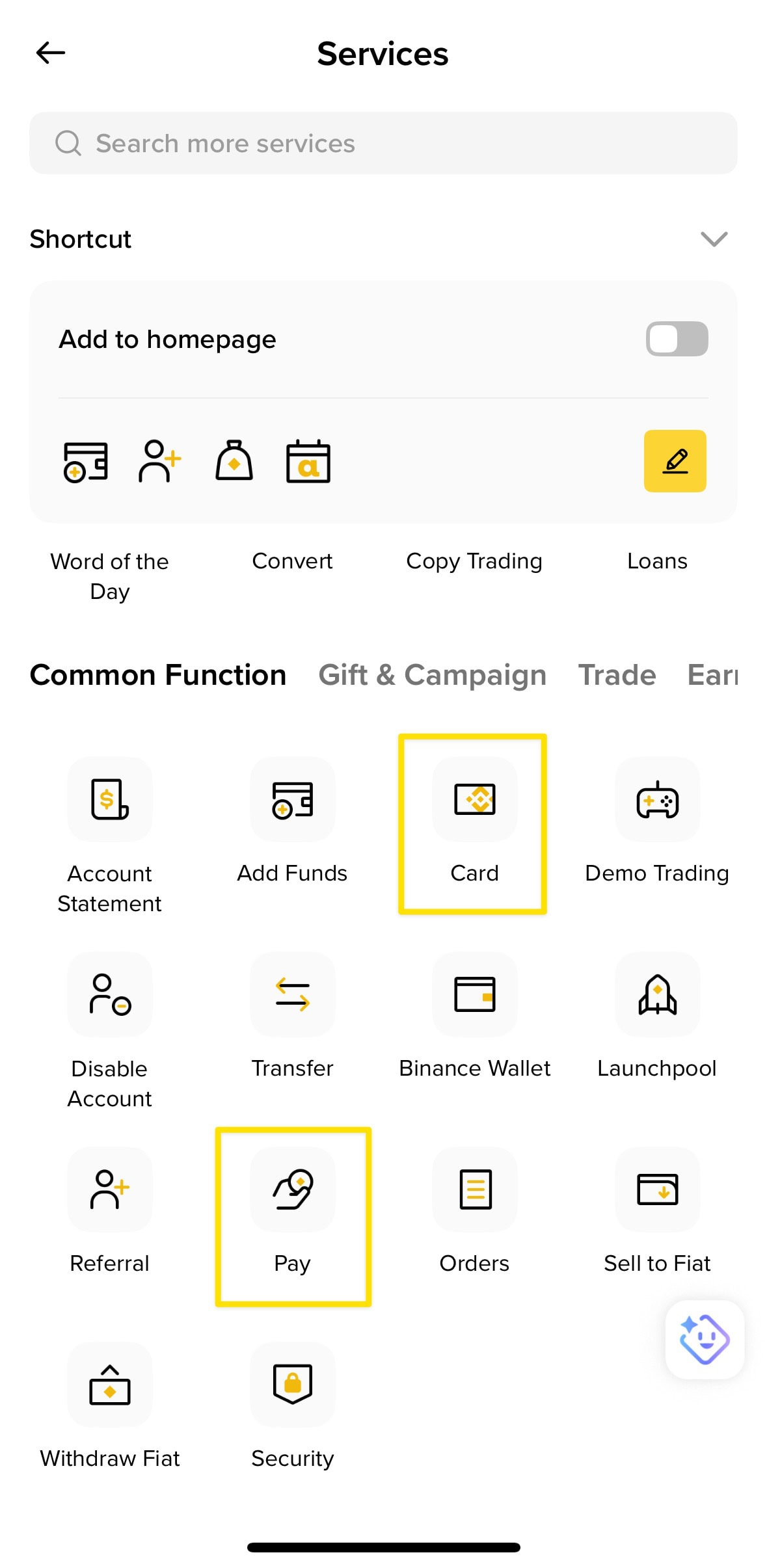
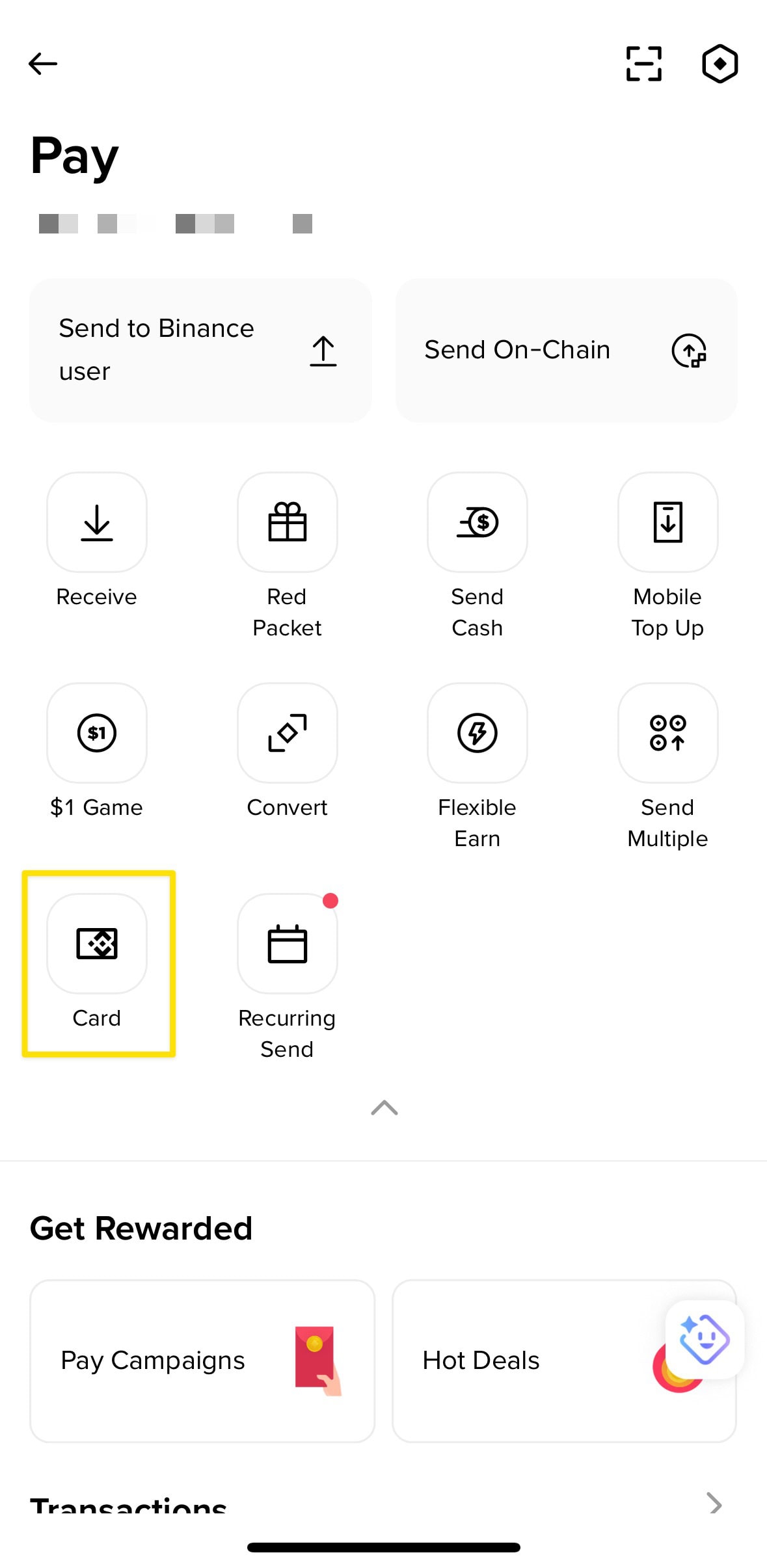
The two screens, in order, show where the Card entry sits in the Binance app: the Services page and the Pay page. An entry on screen is not a promise that you can apply, because eligibility is confirmed at application.
Open the Card page in your own Binance app. If an Apply button is there, the application asks for basic details, a mandatory expected monthly spend in USD and your residential address, and the virtual card is issued within 15 minutes of approval according to the eligibility FAQ. If there is no button, assume the card is not available to you.
Why Binance.US does not fix this
Many US searchers assume Binance.US is the American version of Binance. It is not. Binance.US says that it and Binance.com are “two entirely separate entities”, that accounts cannot be merged, and that US residents who want its services need a separate Binance.US account (Binance.US help center). Its homepage menu lists Buy Crypto, Prices, Trade (Convert, Spot Trading, OTC), Earn (Staking, Boost) and Institutions, with no debit card.
That means there is nothing to apply for on either site. I also do not cover workarounds such as another country’s address or a VPN. The cards page ties eligibility to the account’s country of residence, so a workaround contradicts the one rule Binance does publish.
What is the Binance Card and what does it cost?
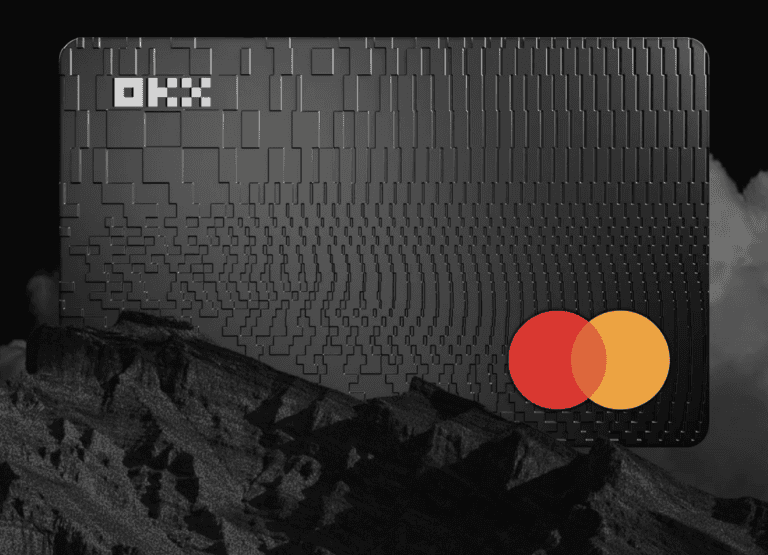
The Binance Card (Global Program) is a USD-denominated Mastercard virtual card issued by Immersve Limited of New Zealand that spends crypto from a Binance account at the moment of payment. If your own app shows the Apply button, these are the headline numbers from Binance’s help pages. The full breakdown is in our Binance Card review.
| Item | Binance Card (Global Program) |
|---|---|
| Annual fee / issuance fee | 0 USD / 0 USD |
| Foreign exchange fee | 2% on top of Mastercard’s fees in most card countries (0% in Colombia, Peru, some CIS countries and Armenia; 3% in New Zealand) |
| Crypto conversion fee | 0.9% (0.1% when paying with USDC) |
| Cashback from 1 June 2026 | 1.5% under 100 USD a month, 2% from 100 to 1,000 USD, 3% from 1,000 USD, capped at 100 USD a month |
Sources: fees page and cashback page.
Security: fake Binance Card offers
Binance’s security FAQ says never to share your CVV or card details, and Manage Card lets a cardholder freeze the card. For a US reader the practical point is different: because the card is not offered to US residents, I would treat any site, message or seller that promises you a Binance Card, or asks for card details, as a red flag.
One more security point for anyone who keeps funds on Binance.com: Binance says its hot wallets were compromised at around 20:05 UTC on 29 October 2026, with about USD 6.3 billion of tokens lost, and that it suspended withdrawals while security checks ran. It states that the losses are covered from the SAFU fund and company funds, not by users, and that withdrawals have been reopening in phases since 1 November, with more assets on 3, 5 and 6 November. Read the latest incident update before moving funds.
Best US crypto card alternatives, compared
These three are marketed to US residents on their own official pages. Rates change, so I quote what each page states on 4 November 2026 and point to the issuer for the current terms. RedotPay is closed to US residents as well; the RedotPay card USA page explains why.
| Card | Type and issuer | Fees | Rewards (as stated on the issuer’s page) |
|---|---|---|---|
| Coinbase Card | Visa prepaid debit; available to US Coinbase customers except Hawaii | No spending fees and no annual fee; no credit check or staking needed | Optional crypto rewards; the rate is variable and shown in the Coinbase app |
| Crypto.com Visa Signature Credit Card | Visa credit card; prepaid Visa offered separately | Tiers under the Level Up programme; Basic needs no subscription or stake, higher tiers need a subscription or CRO stake | Up to 6% back in BTC or CRO depending on tier |
| Gemini Credit Card | Mastercard World Elite credit card issued by WebBank | No annual fee, no foreign transaction fees | 4% on gas, EV and transit (first $300 a month, then 1%), 3% dining, 2% groceries, 1% everything else, paid in crypto |
Which card is suitable depends on whether you want a debit-style card or a credit line. I would start with the Coinbase Card if you want the closest thing to the Binance Card, and I would only consider the credit cards if you are comfortable applying for credit.
- Coinbase Card: closest to the Binance Card idea. You spend from your exchange balance, it is a debit-style card, and there is no credit check. The catch is that crypto is sold at the moment of payment (see the tax section).
- Gemini Credit Card: a real credit card, so you apply for credit instead of spending a balance you already hold. The category rates are strong, but the 4% rate only applies to the first $300 of qualifying spend each month.
- Crypto.com credit card: the headline of up to 6% is a ceiling that depends on tier. Higher tiers need a subscription or a CRO stake, so if you do not want either, you are on the Basic tier and should not expect the top number.
For a wider list, see our best crypto cards for US residents guide, the 2026 crypto credit card comparison and the crypto card finder.
US tax: spending crypto is a sale
Coinbase states on its card page that spending any crypto other than USDC involves selling it, that selling crypto with the card is a taxable transaction, and that you must report gains and losses on your tax return. It tells readers to speak to a tax advisor. I have not re-checked IRS guidance for this page, so I do not quote tax rates here.
In practice, a card that sells crypto at every swipe creates many small taxable events, so count the record-keeping effort as a cost when you compare cards.
Honest verdict: who should skip the Binance Card and who might want it
- US residents: skip it. No official Binance page names the United States, so use the Coinbase, Crypto.com or Gemini cards above.
- Readers abroad whose app shows Apply: the card suits people who already hold stablecoins on Binance and spend a lot. Below roughly 1,000 USD a month at non-USD merchants the 2% FX fee plus the conversion fee outweighs the 1.5% to 2% cashback, as worked through in our Binance Card review.
- Next step for the exchange itself: our Binance register and deposit guide covers the account side for readers outside the US.
FAQ
Is Binance Card available in USA?
No official Binance page names the United States. The cards page says it currently supports Brazil, and the eligibility help page describes support for verified accounts in Colombia and Peru. US residents should plan around other cards.
Does Binance.US have a debit card?
Binance.US’s homepage menu lists Buy Crypto, Prices, Trade, Earn and Institutions and no card product. Binance.US also says it is a separate company from Binance.com, so the Binance Card is not issued through it.
What is the best Binance Card alternative for US residents?
Coinbase Card is the closest to a Binance Card because it is a prepaid debit card funded from your exchange balance. Gemini Credit Card suits people who want a credit card with crypto rewards, and Crypto.com’s credit card suits people willing to use its Level Up tiers.
Is spending crypto with a card taxable in the US?
Coinbase says selling crypto with its card is a taxable transaction and that gains and losses must be reported. Ask a tax advisor how your own purchases are treated.
Can I use a VPN or another address to get the Binance Card?
This page does not cover that. The cards page ties eligibility to the account’s country of residence, so a workaround contradicts the rule Binance publishes.
This page contains no affiliate links or referral codes. Figures come from the official Binance, Binance.US, Coinbase, Gemini and Crypto.com pages named above, checked on 4 November 2026 (the Binance incident note on 6 November 2026), and can change. We have not opened these cards ourselves. This is not financial, legal or tax advice, and crypto can lose value. Last updated: 6 November 2026.