MEXC Card Philippines 2026: Fees, 4-10% Cashback and How to Apply
Key points · Last updated 8 Nov 2026
- New applications: none listed for the Philippines (MEXC’s card page, checked 8 November 2026, logged out): it now lists only the MEXC × ether.fi co-branded card, and that card’s official country list does not include the Philippines. The Global Card (launched 31 August 2026) and the APAC card, both still listed in our 6 November snapshot, are gone from the page. The Global Card is a virtual Visa debit card funded in USDT: no physical card, no ATM.
- Global Card fees: issuance, annual, inactivity and closure are all 0. Each purchase costs 1%, MEXC adds nothing to the Visa exchange rate, and a payment under 1 USD carries an extra 0.10 USD.
- Global Card cashback: 4%, 6% or 10% depending on your VVIP level at settlement, capped at 50, 150 or 800 USDT per month, and paid in USDT to your Fiat account within three calendar days of settlement (T+3), with no manual claim.
- What you keep: on the Standard tier, 4% minus the 1% fee is about 3% on spending up to roughly 1,250 USD a month. Past that the cap bites.
- What you need: a MEXC account with Advanced KYC (ID plus face scan). The country on your proof of address decides eligibility, and review usually takes minutes.
- Best for: people who already hold USDT and spend a few hundred dollars a month online; not for tiny purchases or cash withdrawals.
- The catch: it is an overseas exchange. MEXC’s card pages mention no Philippine licence, and risk control can hold cashback or withdrawals.
What is the MEXC Card, and which card is still offered
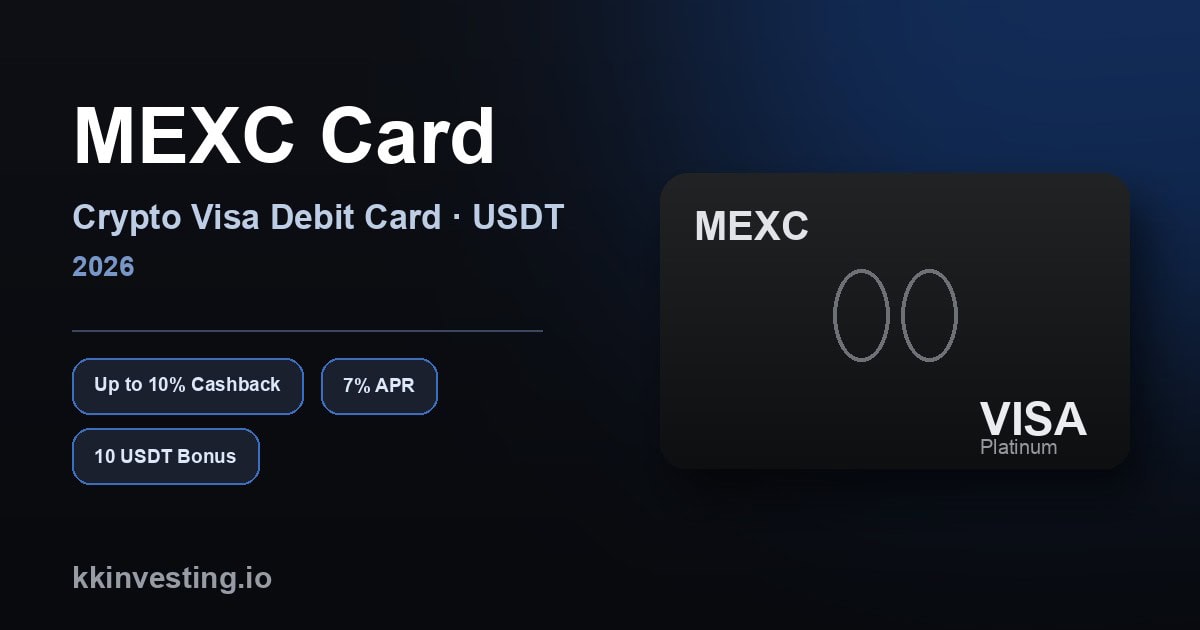
The card pays from the USDT you already hold on MEXC. It is a debit-style Visa card denominated in US dollars: you move USDT from Spot into the Fiat account, top up the card, and each purchase draws on that balance. There is no credit line, no billing cycle and no interest. If a card number leaks, only the balance you topped up is exposed, so most of your USDT can stay in Spot or Earn.
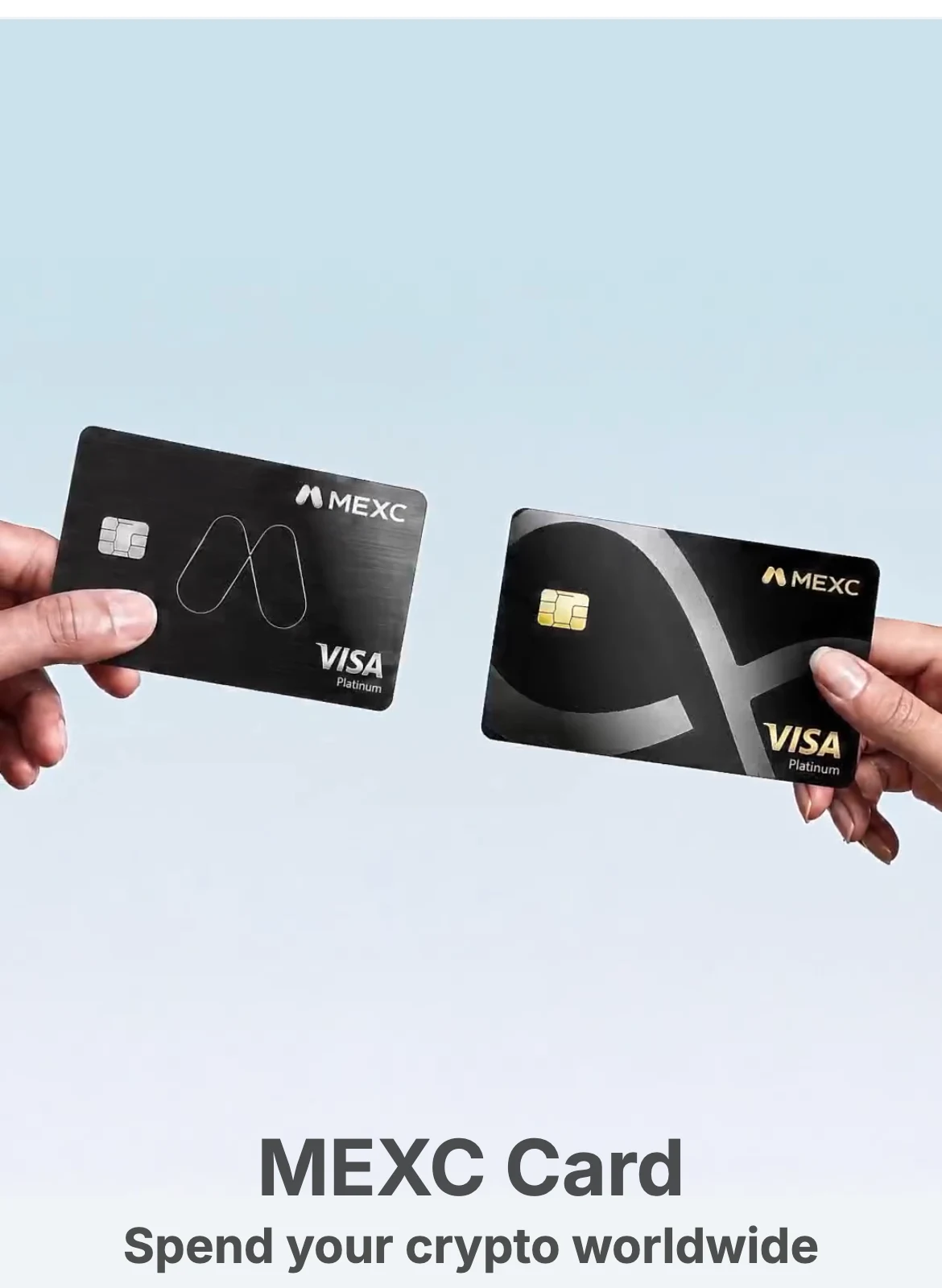
Until 6 November MEXC listed three cards: the Global Card, the original APAC card and a co-branded ether.fi card. On 8 November the official card page (logged out) shows only the ether.fi card; the Global Card and APAC help articles are still online and MEXC has published no reason. The table records the two in-house cards’ existing terms, which now matter mainly to current cardholders:
| Global Card | APAC card | |
|---|---|---|
| Where it is offered | Everywhere not on the 70-country restricted list; the help article names the Philippines, Taiwan and Vietnam | Taiwan, the Philippines, Thailand and Vietnam on MEXC’s Learn page; Thailand only on the Help Center page |
| Fee per purchase | 1% | 0% in MEXC’s 21 October fee article; 1% in the September Help Center article |
| Foreign-currency purchases | Visa rate, no markup | Visa rate plus 1% |
| Refund fee | 0 | 1% on USD spend, 3% on non-USD |
| Apple Pay / Google Pay | Both | Google Pay only |
| Per-transaction / daily limit | 80,000 / 1,000,000 USD | 50,000 / 50,000 USD |
MEXC’s own pages disagree about the APAC card: the Learn guide still lists the Philippines, while the Help Center application article (1 September) lists Thailand only and states a different fee. Which card your account is offered is decided on the application page. The rest of this guide covers the Global Card, because its terms are the ones MEXC documents consistently.
Who can apply: what MEXC’s rules mean in the Philippines
| Question | What MEXC says (28 Oct 2026) | What it means for you |
|---|---|---|
| Is the Philippines excluded? | Not on the Global Card restricted list (70 countries and territories, as of October 2026); the Global Card guide names the Philippines as covered | Eligible on paper for the Global Card, which the card page no longer lists; the ether.fi card’s country list omits the Philippines |
| Which country counts? | The country on your proof of address, not where you travel | Use a document that shows your real Philippine address |
| Who is excluded? | The United States, India, China, Indonesia, Turkey, Russia and Ukraine are on the list; Egypt and Nigeria are not | US and Indian residents cannot apply; other English-speaking markets follow the proof-of-address rule |
| Regulator | MEXC’s card pages mention no BSP or SEC registration, and this guide did not verify one | No local investor protection; treat it as an overseas service |
Eligibility can change quickly, and MEXC says the card application page always overrides its articles. If your country does not show an apply button, there is no workaround worth taking: a document from the wrong country will fail the address check.
How to apply for the Global Card in five steps
These five steps are the Global Card flow. Since the card page no longer offers it, there is nothing to apply for on a new account unless the Apply button returns; steps 1 and 3 to 5 are kept for current cardholders and for anyone checking the process.
- Create a MEXC account through the MEXC sign-up page and complete Advanced KYC: a government ID and a face scan. Without it the card page will not let you apply.
- In the app go to More → Finance → MEXC Card, or on the web open Buy Crypto → MEXC Card, then tap Apply.
- Fill in your contact details, ID details and residential address. Some accounts are asked for a face check or proof of address; the country on that document decides eligibility.
- Wait for review. MEXC says it usually finishes within minutes and sends a confirmation email. Some cards need an activation top-up that stays as card balance and is refunded if the application fails.
- Top up from the Fiat account (1 to 1,000,000 USDT per top-up, no fee), then add the card to Apple Wallet or Google Pay by entering the card details manually. The name in the wallet must match the cardholder name.
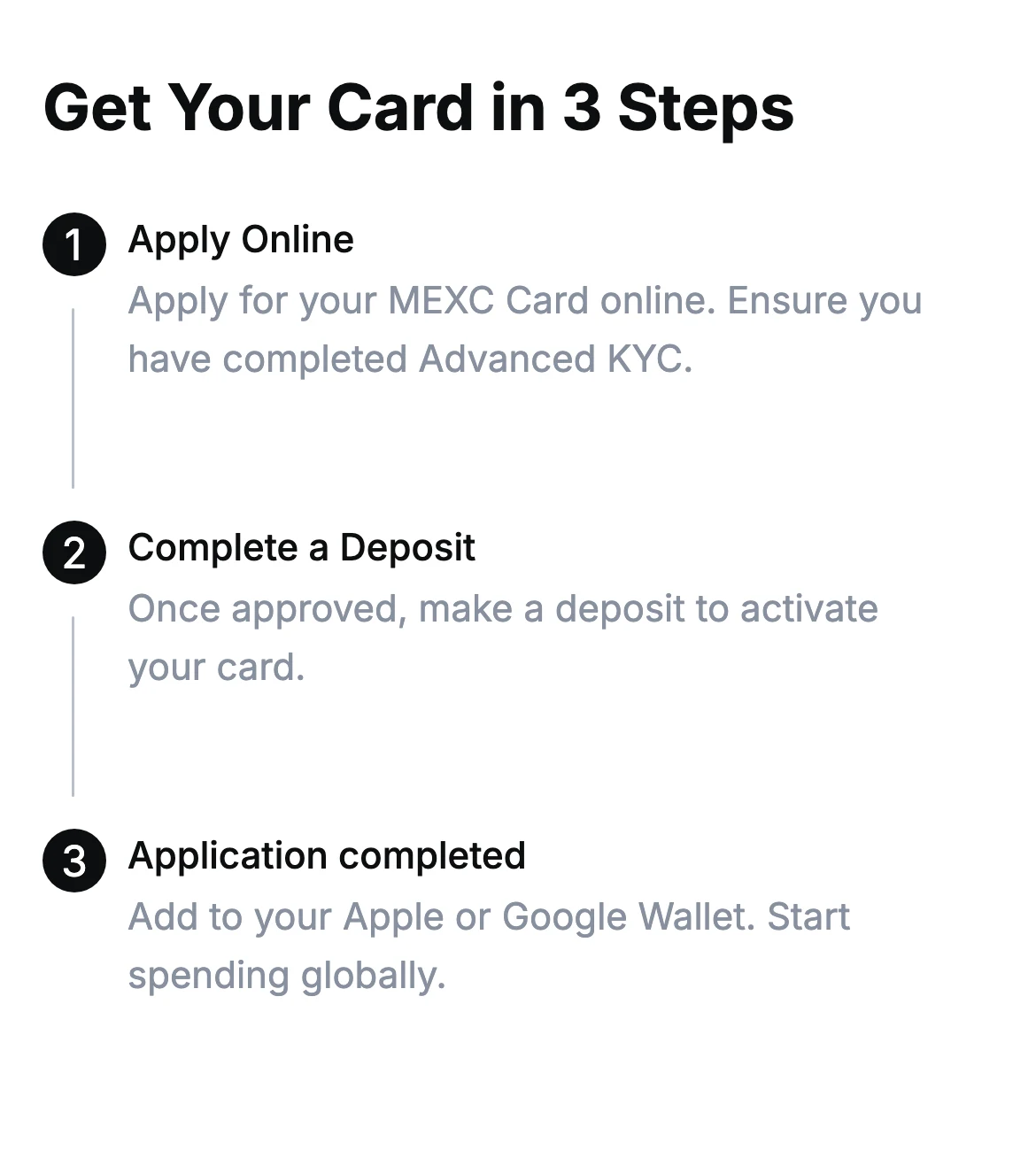
The Fiat account can be funded by a Spot transfer, Quick Buy, P2P Buy or an on-chain USDT deposit. I found no official MEXC card page that lists a peso top-up, GCash or Maya, so plan on USDT as the only way in.
Fees: 1% per purchase, and little else
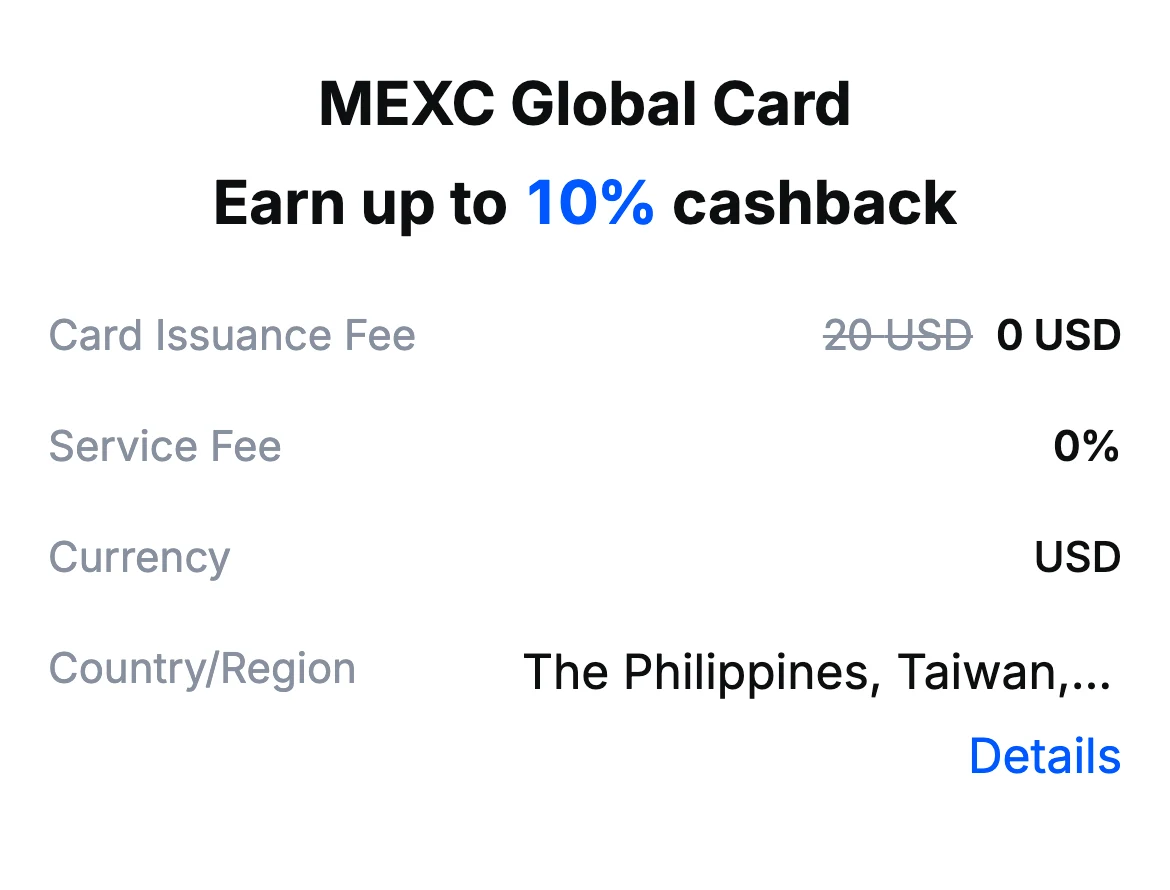
| Item | Global Card | When you meet it |
|---|---|---|
| Issuance, annual, inactivity, closure | 0 | The 20 USD issuance fee is waived for a limited time |
| Top-up | 0 | Fiat account to card balance, 1 to 1,000,000 USDT |
| Purchase fee | 1% | Every purchase; MEXC waived it only until 30 September |
| Foreign currency | Visa rate, no markup | Visa’s own spread is typically 0.1% to 0.3% |
| Purchase under 1 USD | 0.10 USD | Per transaction |
| Failed transactions | 0, or 0.50 USD each | 0.50 USD when your failure rate reaches 20% or more |
| Refunds | 0 | Airline, hotel and travel refunds can take up to 30 days |
The small-payment fee is the one people miss: on a purchase worth a dollar or two the 0.10 USD fee alone is several times the 1%. Use the card for larger purchases and pay coffee-money amounts another way. Fee terms come from MEXC’s fee article (21 October) and its guide to spending abroad.
Cashback: 4%, 6% or 10% by VVIP level
| Tier (M-Score) | Cashback | Monthly cap | Spend that hits the cap |
|---|---|---|---|
| Standard (350-599) | 4% | 50 USDT | about 1,250 USD |
| Premier (600-799) | 6% | 150 USDT | about 2,500 USD |
| Elite (800+) | 10% | 800 USDT | about 8,000 USD |
- Tier at settlement: MEXC’s cashback FAQ says the VVIP level at the time of settlement sets the rate. If your level rises, the rest of that month’s allowance is recalculated on the new cap; if it falls, cashback already paid is not clawed back but the rest of the month’s allowance drops to zero. M-Score comes from trading volume, activity and security settings.
- Paid T+3, automatically: once a purchase settles, the cashback is credited as USDT to your Fiat account within three calendar days. The MEXC Card home page, each card’s detail page and the transaction history all show it. The cashback FAQ does not say from which date T+3 applies or which rule covers October spending, and says the app takes precedence over the FAQ if they differ.
- Settled spend only: a purchase reversed after authorization and never settled earns nothing, and a refund takes back the matching cashback without restoring that month’s allowance. The cap is shared across all your MEXC Cards and resets at 00:00 (UTC+8) on the 1st of each month.
- Not eligible: crypto and wallet top-ups, gift and prepaid cards, transfers, taxes, fines, donations and gambling follow the merchant category code rules in MEXC’s MCC list. Hotels, airlines and restaurants do earn cashback.
If you only spend with the card and do not trade futures, Standard is the realistic expectation; 800 points normally takes heavy trading. MEXC also lists a card-only flexible USDT product at 3% APR from November (100 to 100,000 USDT, manual subscription, interest calculated hourly and paid the next day, independent of cashback), described in its rewards FAQ. The rate was 7% before November, so check the Earn page for the current number before subscribing.
What you actually keep after the 1% fee
| Monthly spend (USD) | Standard: cashback / net | Premier: cashback / net |
|---|---|---|
| 200 | 8.00 / +6.00 | 12.00 / +10.00 |
| 1,000 | 40.00 / +30.00 | 60.00 / +50.00 |
| 2,500 | 50.00 (cap) / +25.00 | 150.00 (cap) / +125.00 |
| 5,000 | 50.00 (cap) / +0.00 | 150.00 (cap) / +100.00 |
Net is cashback minus the 1% purchase fee; the table ignores the Visa spread and the exchange spread when you sell USDT back to pesos. Paying in pesos means the Visa rate converts the peso price to dollars, so the 0.1% to 0.3% Visa spread sits inside what you pay. Standard nets about 3% up to roughly 1,250 USD, then falls to about 1% at 2,500 USD and to nothing at 5,000 USD, because the 50 USDT cap is fixed while the 1% fee keeps growing.
One real payment, from Taiwan. On 27 June 2026 my earlier MEXC Card paid a 75 TWD restaurant bill through LINE Pay, before the Global Card launched. The app charged 2.37 USD; Visa’s calculator gave 2.35464 USD for 75 TWD that day, a gap of 0.0154 USD or 0.65%, and the fee field showed 0. At the Standard 4% that is roughly 3.3% net by my estimate; I kept no screenshot of the cashback credit. It is one Taiwan transaction on an older card, so it shows the exchange-rate gap only, not today’s 1% fee and not how a Philippine account behaves.
Apple Pay, Google Pay and daily use
- Apple Pay and Google Pay: both work with the Global Card. In the wallet choose to add a card and enter the details manually.
- Choose local currency: when a terminal offers to charge in USD, decline. Accepting USD hands the exchange rate to the merchant’s bank, which usually costs more.
- Hotel and car-rental holds: they release on their own, usually in one to three business days. Keep enough balance for the hold plus the bill; a rental desk that wants a physical card will not accept this one.
- Email codes: cross-border or large payments can trigger a 3DS code sent to your registered email, valid for four minutes.
- Declines: do not retry a refused payment in a loop. Repeated failures can cost 0.50 USD each and can trigger a risk review.
Honest verdict: who it suits, and the risks
| Your situation | My take |
|---|---|
| You already hold a Global Card and USDT, and spend a few hundred dollars a month online | A reasonable fit: about 3% net on the Standard tier |
| Many tiny purchases | Poor fit: the 0.10 USD fee under 1 USD erases the cashback |
| You need a physical card, ATM cash or a rental-car deposit | Not possible: virtual only |
| You spend over 1,250 USD a month on Standard | The cap bites; split spending with another card |
| You want to top up with pesos, GCash or Maya | Not offered by any official MEXC card page |
MEXC is an overseas exchange, so assume no Philippine deposit protection. Its own rewards FAQ says cashback can be withheld when risk control flags an account, so a flagged account can lose a month of cashback. I would keep only the next month or two of spending in the Fiat account. New to MEXC? Start from the registration page and read the MEXC sign-up and deposit guide first; for comparison see RedotPay and ether.fi Cash.
Frequently asked questions
Can I get the MEXC Card in the Philippines?
Not as a new applicant for now. On 8 November 2026 MEXC’s card page lists only the MEXC × ether.fi card, and the Philippines is not on that card’s published country list. The Global Card, which MEXC’s guide said covered the Philippines, is no longer listed for application.
Is there a physical MEXC Card?
No. MEXC says physical cards are not offered for now, and the Global Card is virtual only with no ATM withdrawals.
How much cashback does the MEXC Card pay?
4%, 6% or 10% depending on your VVIP level at settlement, capped at 50, 150 or 800 USDT per month and paid in USDT to your Fiat account within three calendar days of settlement (T+3).
Is the MEXC Card worth it after the 1% fee?
On the Standard tier you keep about 3% on spending up to roughly 1,250 USD a month. A payment under 1 USD costs an extra 0.10 USD, so small purchases are a bad fit.
Can I top up with pesos or GCash?
No official MEXC card page lists a peso, GCash or Maya top-up. The card is funded with USDT through the Fiat account.
What is the difference between the Global and APAC cards?
The Global Card charges 1% per purchase with no foreign-exchange markup; the APAC card is listed with a 0% purchase fee but a 1% foreign-exchange fee in MEXC’s 21 October article. Neither card is on the card page’s application list as of 8 November, so the difference matters only to existing cardholders.
Sources behind this MEXC Card Philippines guide, checked 28 October 2026 (the card page’s application list rechecked 8 November 2026): MEXC Card page, fees and limits, Global Card application guide, rewards FAQ, supported countries.
Disclosure: this page contains affiliate links (MEXC referral code XOICb1jMAV); if you register through them we may earn a commission at no extra cost to you. Fees, cashback and eligible countries come from MEXC’s own pages and can change, and nothing here is investment, legal or tax advice.