
Best Crypto Cards USA 2026: Credit & Debit Cards You Can Get, With Real Rewards, Caps and Tax
Key takeaways
- Four cards pass one test: an official US page, re-opened on October 25, 2026, that says who can apply. They are Coinbase Card, Gemini Credit Card, Crypto.com Visa Signature Credit Card and Fold.
- Credit card or not? Gemini, Crypto.com and Fold Credit need a credit check. Coinbase Card and Crypto.com Prepaid do not.
- Best flat reward without a stake: Fold Credit pays 1.5% in bitcoin on all purchases, uncapped. Gemini pays up to 4% but only on the first $300 of spend each month.
- Biggest catch: Crypto.com’s headline 6% needs a $500,000 CRO stake. The free tier is 1.5%, and BTC rewards drop to 1% after $250 a month.
- Spending any crypto except USDC at par with the dollar counts as a sale for US tax purposes. Rewards in bitcoin do not change that.
Best crypto cards for US residents: side-by-side (October 2026)
Every row below comes from the issuer’s own US page. Rates and caps change, so confirm them on the issuer page before you apply.
| Card | Type | Reward | Annual fee | Needs credit check | Who can apply |
|---|---|---|---|---|---|
| Coinbase Card | Visa prepaid debit (Pathward) | Variable crypto reward you pick monthly; check the app | None | No | Coinbase customers in the US, excluding Hawaii |
| Gemini Credit Card | Mastercard World Elite credit (WebBank) | 4% gas/EV/transit, 3% dining, 2% groceries, 1% other; 4% applies on up to $300 spend a month | None | Yes | US applicants who pass the credit application |
| Crypto.com Visa Signature Credit Card | Visa Signature credit (Comenity Capital Bank) | 1.5% free tier up to 6% at the $500,000 stake tier, in BTC or CRO | None on the card; Level Up tiers cost $4.99–$29.99/month or a CRO stake | Yes (soft pre-qualification first) | US residents |
| Fold Bitcoin Credit Card | Credit card on Fold Reserve tiers | 1.5% in bitcoin, uncapped; up to 5% with a $100,000 Reserve | Not stated on the product page; see the cardholder agreement | Yes | Fold users in the US |
| Fold Card | Visa-backed Spending Account card (Lead Bank) | Bitcoin rewards; up to 3% depending on Reserve tier | None stated | No credit card check | Fold users in the US |
Which card fits which spender
- You already hold crypto on Coinbase and want no credit check: Coinbase Card.
- You spend on gas, dining and groceries and pay the bill in full: Gemini Credit Card.
- You want one flat rate and no tiers to track: Fold Bitcoin Credit Card at 1.5%.
- You are willing to lock CRO or pay a monthly fee for a higher rate: Crypto.com Visa Signature Credit Card.
- You hold crypto you do not want to sell: read the tax section first; a card that sells it at checkout creates a taxable event every swipe.
Coinbase Card: the no-credit-check option
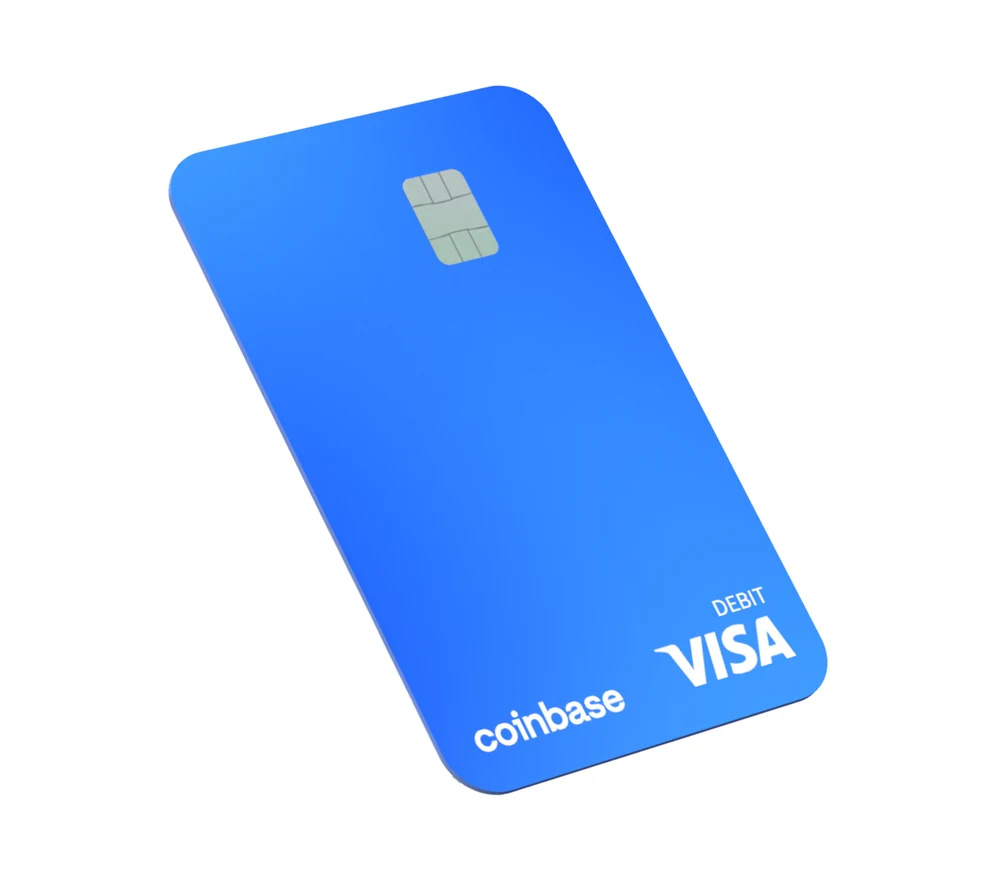
Coinbase Card is a Visa prepaid debit card issued by Pathward, N.A., Member FDIC, and powered by Marqeta. You can spend dollars or crypto at any merchant that takes Visa debit; when you pay with crypto, Coinbase converts it to US dollars at the time of purchase. Coinbase’s page lists it for customers who live in the US excluding Hawaii.
| Item | What the official pages say |
|---|---|
| Fees | No Coinbase fee for spending USD or crypto, no annual fee. A spread applies when Coinbase buys, sells or trades crypto, and an ATM may charge its own fee. |
| Rewards | Optional crypto rewards from a rotating list; you choose one monthly and the rate is variable, shown in the app. |
| Credit check | None. No staking requirement to be eligible. |
| Identity | Valid Coinbase account plus identity verification; Coinbase may ask for your Social Security number, a W-2 and other documents. |
| Not allowed | Gambling, securities broker-dealers, money orders and wire transfers, money services businesses, crypto businesses, firearm and marijuana-related merchants. |
Because the reward rate is a moving target, I would not pick this card on rewards alone. Its edge is simple: no credit pull, one app, and a clear tax rule from Coinbase itself: USDC at par with the dollar generally produces no gain or loss, while any other crypto spent is treated as a sale. If you do not have an account yet, open a Coinbase account first and apply for the card from the Card tab.
How to apply for Coinbase Card
- Sign in to Coinbase on the web or in the mobile app and finish identity verification if you have not.
- Open the Card tab in the navigation bar and start the application; there is no application fee or credit check.
- Pick a virtual card for immediate use or order the physical card, then choose your reward offer for the month.
Gemini Credit Card: highest category rates, small cap
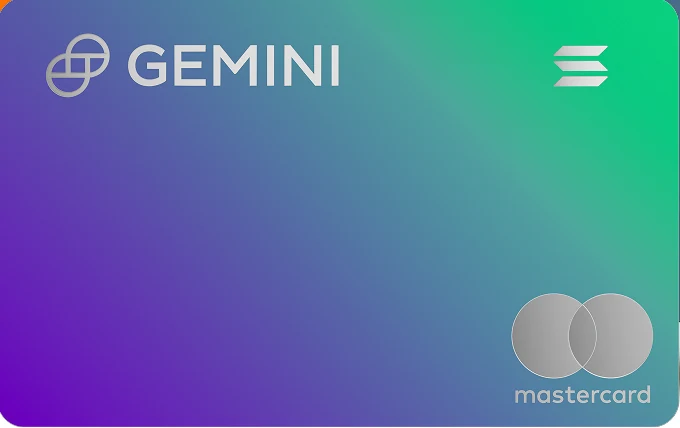
Gemini’s card is a Mastercard World Elite credit card issued by WebBank with no annual fee and no foreign transaction fees. Rewards are paid in crypto.
| Spend category | Crypto back |
|---|---|
| Gas, EV charging and transit | 4% |
| Dining | 3% |
| Groceries | 2% |
| Everything else | 1% |
The part that decides whether it beats a flat 1.5% card is the cap. Gemini says the 4% rate is available on up to $300 of spend per month, then 1% on other qualifying purchases that month, and the cycle refreshes on the 1st. Put $500 of gas on it and you earn about $14 ($300 at 4% plus $200 at 1%), not $20.
It is a real credit card, so approval needs a credit application, and the interest rate matters if you ever carry a balance. Gemini publishes its cardholder agreement (dated September 25, 2026) with the rate and fee schedule; I could not extract the APR figures from the PDF today, so read that document before applying and treat this card as a pay-in-full product.
Crypto.com Visa Signature Credit Card: rates climb with a stake
Crypto.com’s US credit card is issued by Comenity Capital Bank and sits inside the Level Up program. The card itself has no annual fee, but the tier decides your reward rate and you pay for higher tiers with a monthly fee or a 12-month CRO stake. You can check pre-qualification with a soft inquiry that does not affect your credit score.
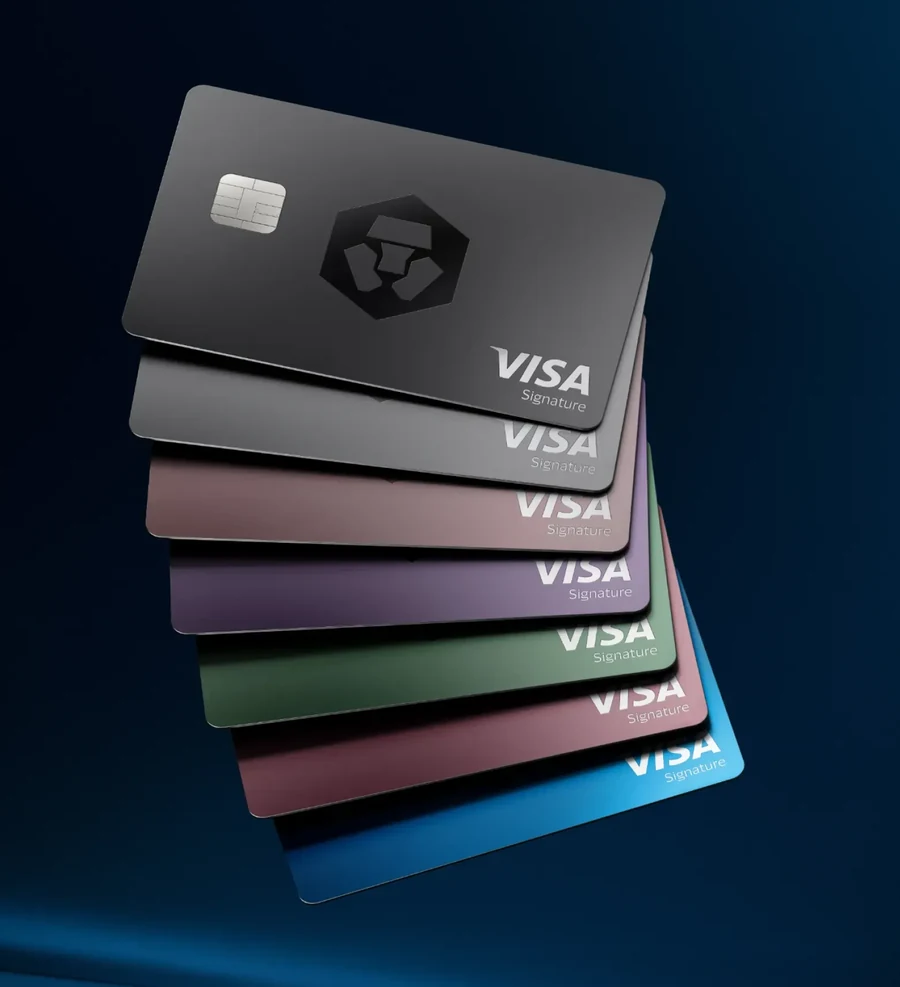
| Level Up tier | Cost to unlock | Reward rate | BTC reward cap per month (then 2%, 1% on Basic) |
|---|---|---|---|
| Basic (Midnight) | Free | 1.5% | $250 |
| Plus (Ruby) | $4.99/month, $49.90/year or $500 CRO stake | 3.5% | $500 |
| Pro (Jade/Indigo) | $29.99/month, $299.90/year or $5,000 CRO stake | 4.5% | $1,000 |
| Private (Icy/Rose) | $50,000 CRO stake | 5% | $5,000 |
| Private (Obsidian) | $500,000 CRO stake | 6% | $10,000 |
Rewards are paid in CRO without a cap, or in BTC up to the monthly spend limit above. Crypto.com also advertises a limited-time welcome bonus in CRO ($100 to $300 depending on tier, after $1,500 to $5,000 in spend within 90 days); because it is time-limited, check the offer page before counting on it.
My read: the free tier is a 1.5% card whose BTC rate drops to 1% after $250 a month, which is weaker than Fold’s flat 1.5%. Plus is the first tier that makes arithmetic sense, because $4.99 a month buys 3.5% on the first $500. If you would rather skip the credit check, Crypto.com also offers a Prepaid Visa on the same tier system; its free tier pays 0% CRO, so the prepaid card is only worth it if you take a paid tier.
Fold: bitcoin back, with the reward rate tied to a Reserve balance
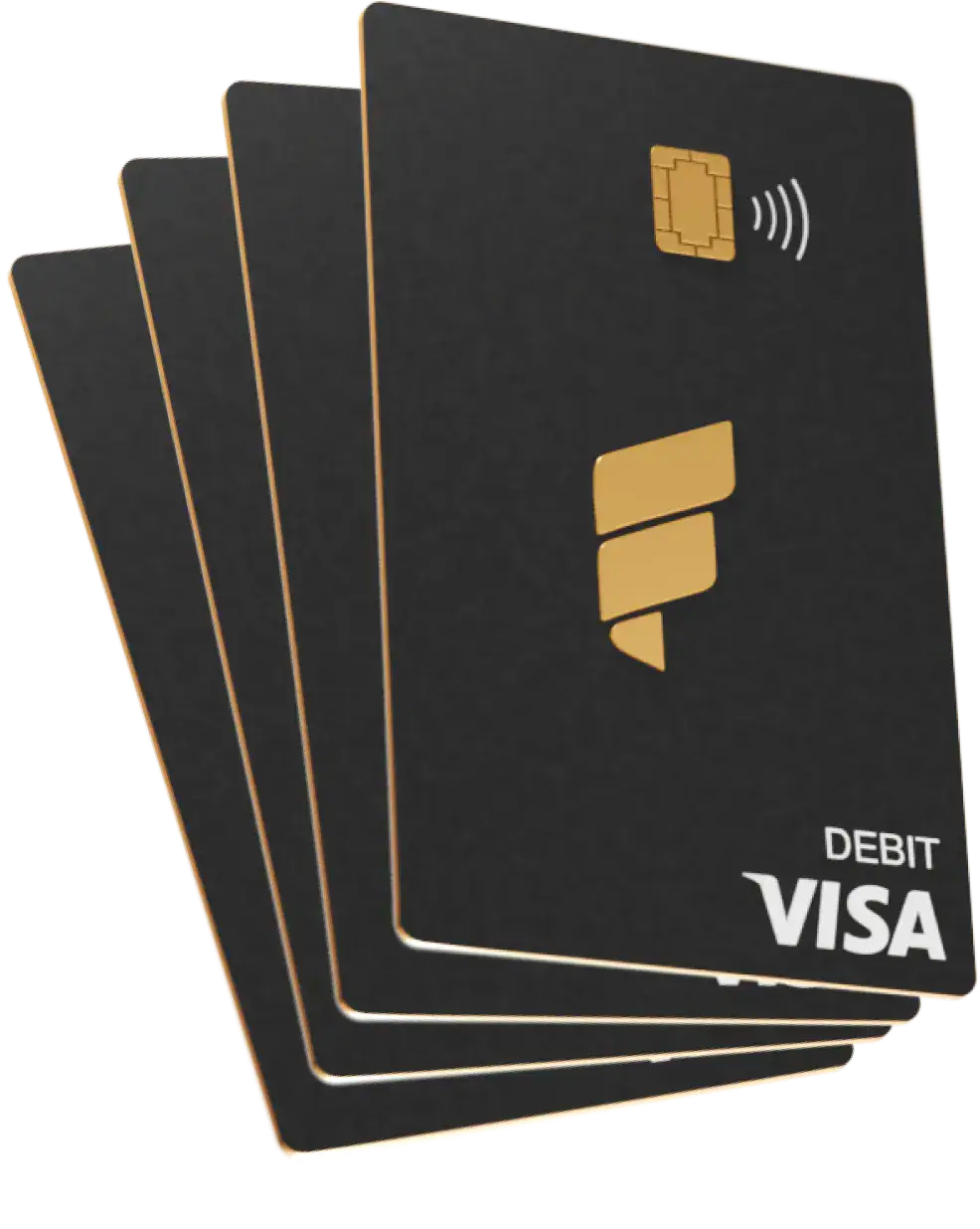
Fold offers two US cards. The Fold Bitcoin Credit Card pays 1.5% in bitcoin on eligible purchases with no cap. Credit is subject to approval and a credit check, the APR is variable and tied to the Prime Rate, and a Fold account is required. A Fold Reserve balance lifts the rate on your first $5,000 of purchases each month:
| Reserve balance | Credit card reward rate |
|---|---|
| None | 1.5% (uncapped) |
| $15,000 | 1.75% |
| $25,000 | 2% |
| $50,000 | 3% |
| $75,000 | 4% |
| $100,000 | 5% |
The Fold Card (the Visa-backed spending account card) pays up to 3% on debit depending on Reserve tier. Fold says credit and debit rewards cannot be earned at the same time, and the Reserve is closed-loop stored value, not a deposit account: it is not FDIC-insured and earns no interest. Fold’s Reserve page adds that Reserve rewards require a $5,000 balance. Fold Holdings, Inc. is listed on Nasdaq (FLD), but Fold itself is a fintech, not a bank.
The honest comparison: $25,000 parked in Reserve lifts the credit rate from 1.5% to 2% on the first $5,000 a month, which is $25 extra a month at most. For most people that is not worth the lock-in; the 1.5% base is the real draw.
What $1,000 a month earns on each card
Using only the issuer terms above and spending the full $1,000 on purchases that earn the headline category rate where one applies. These are simplified, before-tax figures.
| Card (tier) | Monthly math | Earned | After monthly fee |
|---|---|---|---|
| Gemini (all at 4% category) | $300 at 4% + $700 at 1% | $19.00 | $19.00 |
| Crypto.com Basic (BTC) | $250 at 1.5% + $750 at 1% | $11.25 | $11.25 |
| Crypto.com Plus (BTC, monthly fee) | $500 at 3.5% + $500 at 2% | $27.50 | $22.51 |
| Fold Credit (no Reserve) | $1,000 at 1.5% | $15.00 | $15.00 |
| Fold Credit ($25,000 Reserve) | $1,000 at 2% | $20.00 | $20.00 |
| Coinbase Card | Reward rate is variable | Check app | None |
Two things to notice. Gemini only looks best if most of your spend is in its 4% category; at a mixed $1,000 it is closer to Fold. And the Crypto.com Plus result assumes you use the monthly plan, not the $500 stake, which ties up capital that could be earning elsewhere.
Crypto card tax in the US: the short version
The IRS says digital assets are property, not currency, and that disposing of them in exchange for goods or services in any amount is a reportable event, with gain or loss calculated from your basis (what you paid) and the value at the time. In practice, a card that sells your ETH or BTC at checkout creates a capital gain or loss on that swipe. Coinbase notes the same for Coinbase Card and adds that USDC at par with the dollar should not produce a gain or loss.
- Rewards you earn on a card are separate from the spending event; keep records of both.
- If you want fewer taxable events, fund the card from dollars or USDC rather than from appreciated crypto.
- The IRS digital assets page is the primary source, and a tax professional can tell you how it applies to your own return.
Official reference: IRS digital assets guidance.
Cards that come up in US searches but are not in the table
A US search also surfaces cards built for other markets. These are not recommended here, either because their own terms exclude US residents or because I could not confirm a current US page on the check date.
| Card | Status for US residents | Where to read more |
|---|---|---|
| RedotPay, Bybit Card, Jupiter Global Card, Tria | Not available to US residents under their own terms | RedotPay in the USA · Jupiter in the US |
| MetaMask Card | New US applicants paused; physical Metal card orders reported paused since June 2, 2026 (MetaMask support page, not re-opened today) | Re-check MetaMask support before assuming access |
| ether.fi Cash | US availability depends on your state; I could not re-verify the state list today | ether.fi Cash review |
| Ready Card | No US page confirmed on the check date | Ready said in Aug 2026 it no longer builds a crypto neobank; the card is not offered |
| Coinbase One Card (credit) | Coinbase help links a separate credit-card article, but the page would not load and no rate page was verifiable on the check date | Check Coinbase help directly |
| OKX Card, KAST | US eligibility not clearly confirmed; OKX’s US licenses page excluded several states when last checked | OKX Card review · KAST review |
For a country-by-country check of what you can apply for, use the crypto card finder; for a wider global list, see best crypto credit cards 2026 and best crypto cards for Canada.
How to choose in three questions
- Will you pass a credit check and pay in full each month? If yes, Gemini or Fold Credit. If no, Coinbase Card or a prepaid option.
- Where does your spend actually go? Heavy on gas, dining and groceries favors Gemini; scattered spend favors a flat rate.
- Would you accept a monthly fee or lock-up for a higher rate? Only then does Crypto.com Plus or a Fold Reserve balance beat the free options.
Frequently Asked Questions
Which crypto card is best for US residents?
It depends on credit access and spending mix. Fold Credit has the simplest flat rate (1.5% in bitcoin, uncapped). Gemini has the highest category rates but a $300 monthly cap on the 4% tier. Coinbase Card needs no credit check.
Is spending crypto with a card taxable in the US?
Yes. The IRS treats digital assets as property, and disposing of them for goods or services is reportable. Coinbase says USDC at par with the dollar should not produce a gain or loss; other crypto spent is treated as a sale.
Do crypto cards require a credit check?
Credit cards (Gemini, Crypto.com Visa Signature, Fold Bitcoin Credit Card) do. Coinbase Card and prepaid or debit-style cards generally do not; Coinbase states there is no credit check or staking requirement.
Which card has no annual fee?
Gemini Credit Card and Coinbase Card state no annual fee. The Crypto.com card has no annual card fee, but its Level Up tiers cost $4.99 to $29.99 a month or require a CRO stake.
Can I get Coinbase Card in every state?
Coinbase lists it for US residents excluding Hawaii. You also need a verified Coinbase account.
Why are so many global crypto cards missing from this list?
Their own terms exclude US residents or do not confirm a US program. Cards whose US status I could not verify on the check date are listed as unconfirmed rather than recommended.
Last updated: October 25, 2026. Sources checked that day: Coinbase Card · Coinbase fees and taxes · Gemini Credit Card · Crypto.com credit card · Fold Credit · Fold Reserve · IRS
Wondering why the Binance Card is missing from this list? Binance’s own pages do not name the US for it, as we explain in Binance Card in the USA: not available, and what to use instead.
Affiliate disclosure: this article contains a Coinbase referral link; if you sign up through it we may earn a commission at no extra cost to you (referral code R9RXF87). Gemini, Crypto.com and Fold are linked without referral codes. This is not tax, legal or investment advice; terms change, so rely on each issuer’s current documents.